Insurance compliance starts before the drive
Oregon Auto Insurance Laws Guide for Coverage and Compliance

Content
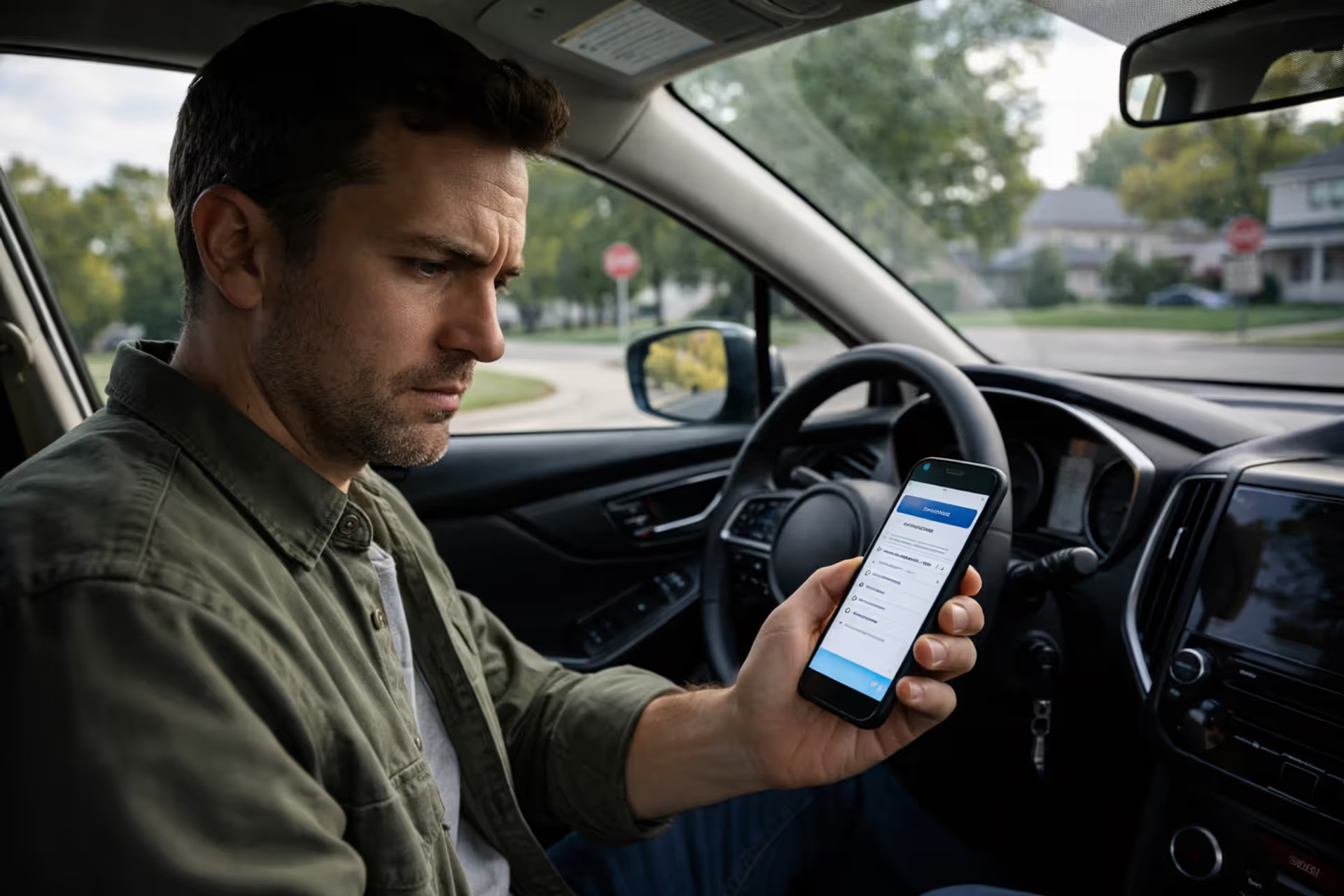
Your insurance company just canceled your policy. Two days later, you're driving to work when you notice something wrong—your license has been suspended. You haven't even received a letter yet. How did the state find out so fast?
Oregon connects insurance companies directly to the DMV through automated monitoring. Every policy cancellation, every lapse in payment, every expired policy triggers an electronic alert that lands on the DMV's desk within ten business days. Most states wait for you to get pulled over. Oregon doesn't wait. The suspension happens automatically, often before you realize your coverage ended. Then come the fines, the reinstatement fees, and the three years of SR-22 monitoring that follows you around like a criminal record.
Minimum Liability Coverage Required in Oregon
Start with 25/50/20. Those numbers aren't suggestions—they're the legal floor for operating a vehicle in this state.
- $25,000 covers one person's injuries per accident
- $50,000 is your total cap when you injure multiple people
- $20,000 pays for damaged property
That first figure handles everything from ambulance rides to surgery costs, from physical therapy sessions to compensation for suffering. If you T-bone someone at an intersection and break their collarbone, this pays for their treatment. The second number matters when crashes involve multiple victims. Run a red light and hit a car carrying four passengers? That $50,000 gets split among everyone you injured, which means it disappears fast. The property damage portion covers more than you'd think—totaled vehicles, obviously, but also damaged fences, destroyed mailboxes, smashed storefronts, even someone's expensive road bike that was strapped to their car roof.
Here's the problem: medical inflation. A broken leg requiring surgical repair will consume $32,000 at most Portland hospitals before you even get to rehabilitation. Total a three-year-old Toyota Highlander? You're looking at $43,000 in replacement value. Cause any crash more serious than a parking lot fender-bender, and these OR liability limits evaporate before you've finished dealing with the first injured person.
Oregon's Insurance Verification Program runs 24/7. Your insurer's database talks directly to the state's system. Miss a payment? The computer knows before you do. Let your policy expire while you're shopping for cheaper rates? The DMV gets an electronic notification within days, not months. This catches coverage gaps that would slip through the cracks in states still relying on random traffic stops to verify insurance.
What Happens If You Drive Without Insurance in Oregon
Get stopped by police without proof of coverage? You're walking away with a $130 citation minimum. Your license gets suspended on the spot. The DMV simultaneously suspends your vehicle registration—that specific car becomes illegal to drive even after you buy insurance tomorrow.
Fixing this requires paying the ticket, proving you now have coverage, and forking over another $75 just to reinstate your driving privileges. Second offense within five years bumps the minimum fine to $250. Third violation brings fines climbing past $1,000, possible vehicle impoundment, and a mandatory SR-22 requirement that follows you for three years.
Those legal penalties hurt your wallet, sure. But the real financial disaster happens when you cause a crash while uninsured. Oregon courts can garnish your wages, place liens on your property, and suspend your license indefinitely until you've repaid every dollar of damages. Uninsured accident debts can balloon past $200,000 from a single serious collision. Bankruptcy won't save you—these debts stick around regardless.
Additional Coverage Rules Beyond Basic Liability
Most states let you choose whether to buy Personal Injury Protection. Oregon doesn't give you that option. Every single auto policy sold in this state must include PIP coverage, period.
Your PIP responds regardless of who caused the collision. Someone texting and driving plows into you at a stoplight? Your PIP pays your medical bills, replaces your lost wages, and covers essential services like childcare when injuries prevent you from working. The state requires a minimum $15,000 per person, though that's barely sufficient for anyone who earns more than minimum wage.
This protection follows you even when you're not in your car. Walking through a crosswalk when a distracted driver strikes you? Your auto policy's PIP still kicks in and pays. Your teenage daughter riding as a passenger in her friend's car during a crash? Your PIP covers her injuries. Claims must be processed and paid within 30 days of submitted documentation—no waiting around while insurance companies investigate fault or argue over liability.
You can trim your premium slightly by accepting a PIP deductible ranging from $250 up to $5,000. Some drivers carrying comprehensive health insurance through their employer sign written rejection forms to opt out of PIP for themselves, though this rarely saves more than $50 annually and creates frustrating coverage gaps.
Uninsured Motorist and Underinsured Motorist coverage isn't legally required, but insurance companies must offer it to you at limits matching your liability coverage. Declining this protection requires your actual signature on a rejection document. Consider that roughly 1 in 7 Oregon drivers operates a vehicle without any insurance whatsoever. Skipping UM/UIM coverage means gambling you'll never be one of the unlucky ones who gets hit by these people.
UM/UIM responds when an uninsured driver injures you, or when their coverage proves woefully insufficient for your medical expenses and lost income. Unlike PIP's quick payment structure, UM/UIM requires proving the other driver caused the collision. The advantage? It addresses damages PIP won't touch—compensation for permanent disabilities, chronic pain, scarring, or loss of enjoyment of life.
Collision and comprehensive coverage remain optional unless your lender demands them. Collision repairs your vehicle after crashes regardless of who caused them. Comprehensive handles everything else—stolen vehicles, hail damage, deer strikes, vandalism, falling trees. Financed or leased vehicles almost always require both coverages.
How Oregon's At-Fault Accident Laws Affect Your Coverage

Author: Calvin Prescott;
Source: trialstribulations.net
Oregon uses something called "modified comparative negligence" when sorting out who owes what after accidents. Translation: you can still collect money from another driver even when you're partially responsible for the crash—unless investigators determine you're more than 50% at fault.
Picture this: you're 30% responsible for a collision that causes $15,000 damage to your vehicle. You'll still recover $10,500 from the other driver (that's 70% of your total damages). But cross that 51% threshold of responsibility? You collect zero dollars and potentially owe the other driver for their damages instead.
Police reports matter during these fault determinations, but they don't make the final call. Insurance adjusters reconstruct what happened using impact angles, vehicle damage patterns, witness statements, surveillance footage, and Oregon traffic statutes. Right-of-way regulations, required following distances, turn signal requirements—all of these laws factor into who gets blamed and by how much.
Rear-end collisions typically dump complete fault on the following driver. Left-turn crashes usually blame the turning driver unless the oncoming vehicle ran a red light. Lane-change incidents generally fault the merging driver. Parking lot accidents often split fault 50/50 when both vehicles were moving.
This modified comparative system becomes absolutely crucial when you're choosing coverage limits. Carry bare minimums while sharing partial fault, and you might end up owing the other driver thousands while lacking sufficient coverage for your own vehicle damage. Higher liability limits protect your bank account, your house, and your future earnings when fault percentages land somewhere in disputed gray territory.
Most Oregon drivers don't grasp that minimum liability figures were established back in the 1970s and haven't kept pace with modern accident costs. A basic fender-bender in downtown Portland can generate $35,000 in combined claims after you factor in rental vehicles, diminished value, and out-of-pocket medical expenses that insurance doesn't fully cover. That $25,000 per-person limit gets exhausted shockingly fast in real-world collisions.
— Jennifer Hartman, Oregon Insurance Commissioner
Factors That Influence Your Premiums in Oregon
Oregon law permits insurance companies to consider dozens of variables when calculating what you'll pay. Your driving record carries the most weight—one at-fault collision typically raises your rate around 40% for the next three years. DUI conviction? Your premium could triple while simultaneously requiring SR-22 filing that brands you as high-risk.
Credit-based insurance scoring creates massive premium differences between drivers. Oregon allows insurers to check your credit history, and drivers with poor credit scores frequently pay 50-70% more than drivers with excellent credit, even when their driving histories look identical. Insurance companies insist credit scores predict claim frequency. Consumer advocates dispute whether this correlation justifies such dramatic price variations.
Where you park overnight creates substantial premium swings. Cities experiencing higher claim rates, elevated vehicle theft statistics, and larger populations of uninsured drivers all cost more to insure. Portland drivers typically pay about 25% more than rural county residents for completely identical policies covering the same car with the same driver.

Author: Calvin Prescott;
Source: trialstribulations.net
What Oregon Drivers Actually Pay for Auto Insurance
| City/Region | What You'll Pay Annually | How It Compares Statewide |
| Portland | $1,847 | 18% above average |
| Eugene | $1,624 | 4% above average |
| Salem | $1,556 | 1% below average |
| Bend | $1,489 | 5% below average |
| Medford | $1,402 | 10% below average |
| Oregon Average | $1,564 | baseline comparison |
What you drive matters because of repair costs, theft statistics, and injury claim patterns. A Honda Civic costs substantially less to insure than a Dodge Charger because of theft frequency and the demographic profiles of typical drivers. Modern safety technology like automatic emergency braking qualifies for discounts at most insurance carriers.
Oregon companies offer various discount programs worth exploring: bundling home and auto policies saves 10-25%, good student discounts reduce bills 10-15% for teenagers maintaining B averages or better, defensive driving courses trim 5-10%, and insuring multiple vehicles lowers per-car costs. Ask about low-mileage programs when you drive under 7,500 miles yearly—several insurers now offer pay-per-mile options that bill you only for actual miles driven.
Age and gender impact your rates significantly until age 25, when premiums typically drop substantially. Married drivers pay less than single drivers with matching records. Continuous coverage history matters tremendously—even a six-month gap can label you a "new" driver facing elevated pricing.
Proof of Insurance and Compliance Requirements
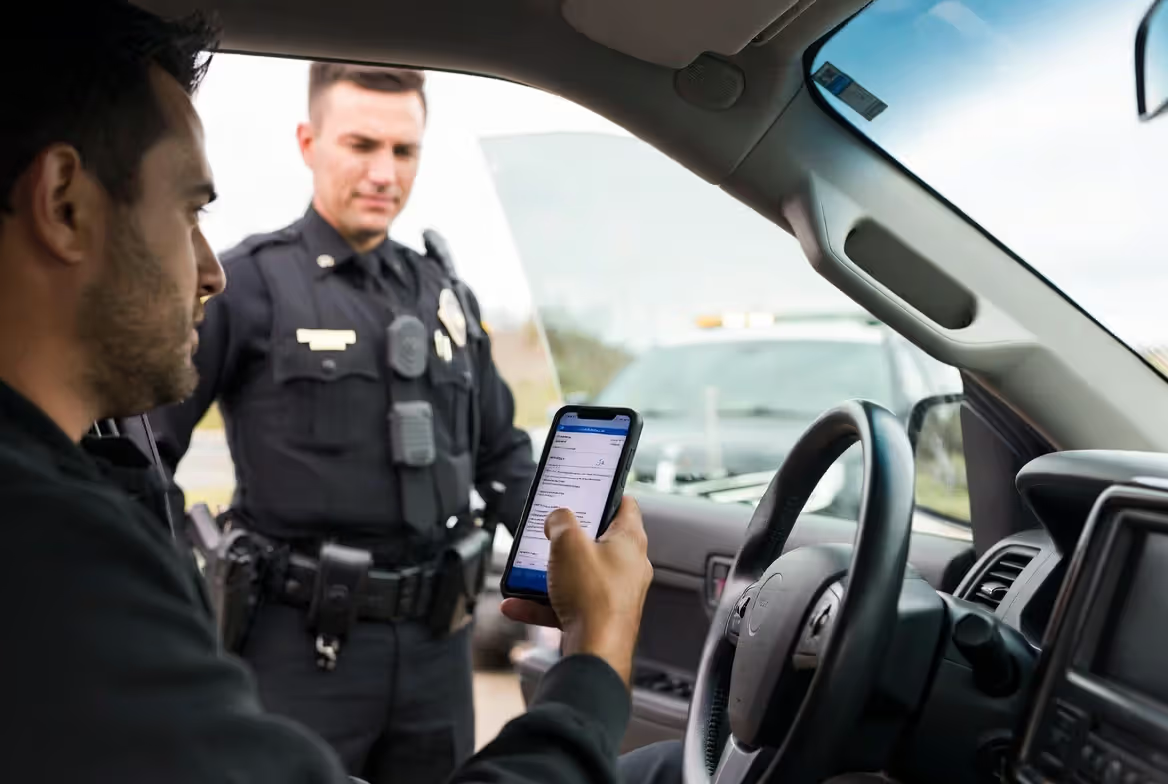
Oregon law accepts digital insurance cards displayed on your smartphone when police conduct traffic stops. Pull up your insurer's app or display a saved screenshot of your insurance card. Officers can view your insurance information but cannot search beyond what you're actively showing them. Save screenshots for areas with unreliable cell service or dead zones.
Traditional printed insurance cards work equally well. Your insurer mails you cards displaying your name, policy number, effective dates, and vehicle information. Toss current cards in your glove box and discard expired ones to avoid accidentally presenting outdated proof during traffic stops.
SR-22 certificates aren't actually insurance—they're legal documentation proving you're maintaining minimum required coverage. Courts or the DMV mandate SR-22 filing after serious violations: DUI arrests, operating vehicles without insurance, excessive speeding convictions, or multiple at-fault crashes within short timeframes. Your insurance company files the SR-22 electronically with Oregon DMV, typically charging $15-50 for handling the administrative processing.
Author: Calvin Prescott;
Source: trialstribulations.net
Most SR-22 obligations last three years. Let your policy lapse even once during this period, and your insurer automatically notifies DMV within ten days, triggering immediate license suspension. Fixing a suspension means purchasing new coverage, filing another SR-22, and paying reinstatement fees all over again. Some drivers maintain SR-22 status beyond their required period just to avoid risking accidental lapses that restart the clock.
Oregon DMV randomly verifies compliance by mailing notices demanding proof of coverage within 30 days. Ignore these verification letters or miss the deadline, and automatic license suspension follows. These letters often target recently purchased vehicles or appear during registration renewal periods when the system flags potential gaps.
Selling your vehicle? Contact your insurer the same day. Oregon's compliance system flags mismatches between registered vehicle owners and insurance policyholders. Maintaining coverage on a vehicle you sold last month while leaving your new purchase uninsured violates state law and triggers penalties.
Common Mistakes That Lead to Coverage Gaps
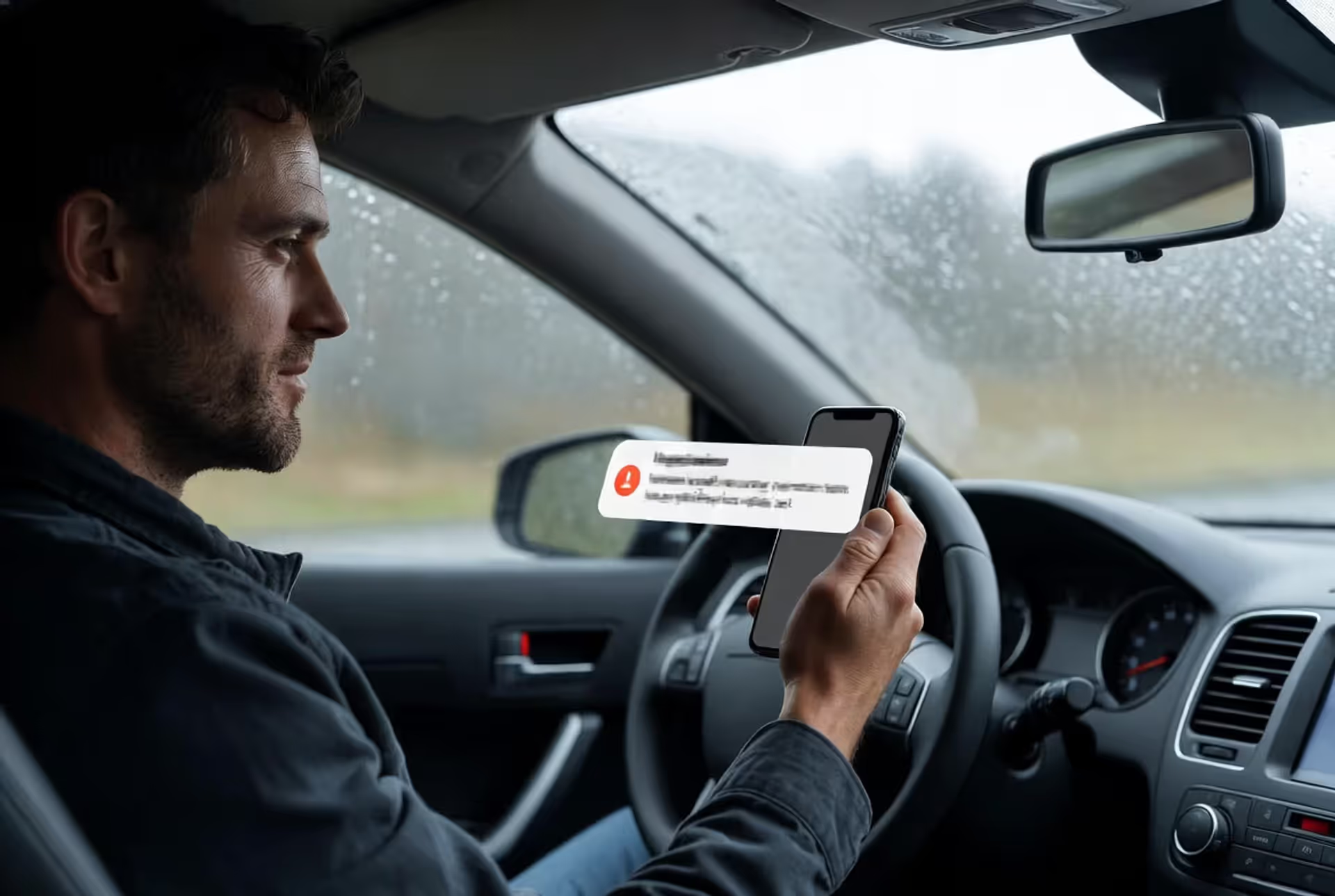
Missing even a single premium payment causes the majority of coverage gaps. Skip one payment deadline, and you'll receive a cancellation notice providing just 10-20 days before your policy terminates. Insurers notify DMV automatically, initiating suspension procedures before you might even realize your coverage ended. Set up automatic payments or create calendar alerts several days before each due date to avoid this trap.
Switching insurance companies sometimes creates gaps when drivers cancel old coverage before confirming their new policy has activated. Always verify your new policy's precise effective date and time before canceling existing coverage. Even a two-hour gap between policies triggers DMV penalties and suspension procedures.
Author: Calvin Prescott;
Source: trialstribulations.net
Maintaining bare minimum limits satisfies legal requirements without adequately protecting your personal assets. Minimum coverage looks sufficient until a serious accident generates hundreds of thousands in injury claims and property damages. The typical Oregon household holds over $300,000 in net worth—far exceeding what 25/50/20 coverage protects. Umbrella policies add $1-5 million in liability protection for just $200-500 annually, creating a safety net for catastrophic accidents.
Plenty of drivers incorrectly assume their employer health insurance eliminates their need for PIP. Wrong. PIP covers expenses health insurance won't address—lost wages during recovery periods, childcare while you're injured, transportation to medical appointments. PIP also pays without deductibles or copays up to your selected coverage limit, providing immediate cash flow when you're unable to work.
Relocating here from another state causes compliance issues when drivers delay updating their insurance policies. Oregon requires new residents to obtain Oregon-specific coverage within 30 days of establishing residency. Your previous state's policy doesn't include Oregon's mandatory PIP requirements, meaning you're technically driving uninsured even though you have an active policy elsewhere.
Address changes within Oregon can shift your premiums significantly. Failing to update your address might temporarily reduce costs but constitutes insurance fraud. File a claim later, and insurers can deny coverage or cancel your policy retroactively, leaving you personally liable for all damages while potentially facing criminal insurance fraud charges.
Named-driver exclusions create coverage gaps families don't anticipate until disaster strikes. Excluding a high-risk household member reduces your premiums substantially but means absolutely zero coverage when they operate your vehicle—even during emergencies. Excluded drivers who crash your car can still trigger your personal liability when you knowingly provided them access to your keys.
Frequently Asked Questions About Oregon Auto Insurance Laws
What are the penalties for a first-time lapse in Oregon auto insurance?
First offenses bring a $130 minimum fine, immediate license suspension, and suspended vehicle registration. You'll also pay an additional $75 reinstatement fee after providing proof of current coverage to the DMV. The state requires documentation of continuous coverage for three years following the violation. Any subsequent lapses during this probationary period trigger significantly harsher consequences including potential vehicle impoundment.
Protecting Yourself Beyond Minimum Requirements
Oregon auto insurance laws establish legal minimums, not intelligent recommendations for protecting yourself financially. Minimum coverage keeps you legal on paper without providing adequate real-world financial protection. A serious accident generates hundreds of thousands in medical expenses, lost income, rehabilitation costs, and property damage—quickly exhausting 25/50/20 limits and exposing your personal assets to lawsuits.
Consider everything you own when selecting liability limits for your policy. Courts routinely authorize bank account seizures, wage garnishment, and property liens to satisfy judgments exceeding your insurance coverage. Increasing liability to 100/300/100 adds roughly $150-300 annually while protecting your home equity, retirement accounts, savings, and future earnings from being drained by lawsuits.
PIP limits deserve equal attention during policy selection. That $15,000 minimum might handle minor soft tissue injuries but falls dramatically short for broken bones requiring surgery or extended rehabilitation periods. Raising PIP to $25,000 or $50,000 typically adds just $50-150 to your annual premium while preventing medical debt from wiping out your savings after crashes when you're unable to work for weeks or months.
Review your policy annually rather than just letting it auto-renew. Life circumstances change constantly—new vehicle purchases, teenage drivers joining your policy, address changes, improved credit scores—all affect appropriate coverage levels and available discount opportunities. Spending 30 minutes comparing quotes yearly can save hundreds while ensuring your coverage actually matches your current situation and financial exposure.
Oregon's verification system catches non-compliant drivers more effectively than most other states while simultaneously protecting compliant drivers from shouldering costs created by uninsured motorists. Maintaining continuous coverage, understanding your actual policy components rather than just looking at the price, and carrying adequate limits transforms insurance from a legal checkbox into genuine financial protection for everything you've worked years to build.