Insurance proof before every drive matters
Indiana Insurance Requirements Guide for Minimum Coverage Costs and Compliance

Content
Before you turn the key in your ignition, Indiana law demands you carry proof you can cover damages if something goes wrong. Pull out of your driveway without it, and you're one traffic stop away from losing your license—even if you've never caused an accident.
The state's minimum liability requirements were last updated when medical costs were a fraction of today's rates. A fault-based system means whoever's responsible for the crash pays for everyone's losses. Sounds straightforward until you're facing a $200,000 lawsuit with only $50,000 in coverage.
What Auto Insurance Coverage Does Indiana Law Require?
Indiana Code § 9-25-4-5 sets three liability benchmarks every driver must meet:
- $25,000 for injuries to one person
- $50,000 for injuries to multiple people in one crash
- $25,000 for property you damage
Agents shorthand this as "25/50/25." Here's how it breaks down in real situations. That first $25,000 covers someone else's hospital bills, rehabilitation costs, lost paychecks, and compensation for suffering. Rear-end a motorcyclist who needs surgery? You're protected up to $25,000 for their losses.
The second number—$50,000—caps what your policy pays when multiple people get hurt. If three passengers in another car need treatment, your insurer won't pay more than $50,000 total, regardless of their combined expenses. Split among several injured people, $50,000 disappears fast.
Property damage covers the tangible stuff you destroy. Vehicles, certainly, but also mailboxes, storefronts, guardrails, or landscaping. Slide into a parked Mercedes? Your policy covers up to $25,000 of the repair bill.
Here's what these coverages won't touch: your own car repairs or your medical treatment after a crash where you're at fault.
Every insurer doing business in Indiana must also offer uninsured motorist protection at those same 25/50/25 thresholds. You're allowed to refuse it, but you'll sign a written waiver acknowledging you understand the risk. Underinsured motorist coverage—which activates when someone carrying bare-minimum insurance hits you and their limits run out—must also be offered.
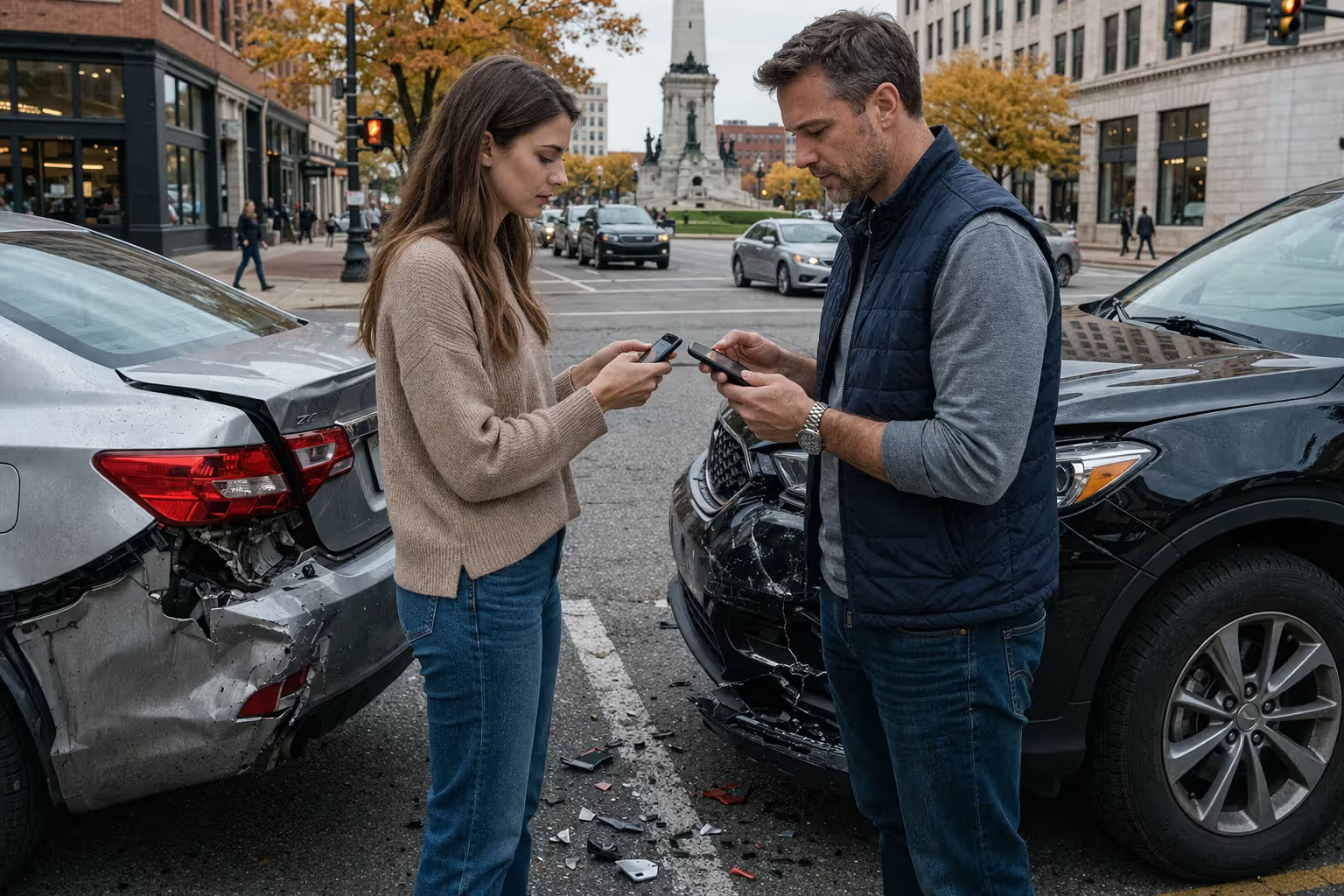
The Bureau of Motor Vehicles checks insurance status during registration, at traffic stops, and whenever an accident gets reported. Your insurance card (digital versions work fine), policy declaration page, or self-insurance certificate all satisfy this requirement.
Author: Brandon Whitaker;
Source: trialstribulations.net
How Indiana Liability Rules Differ from Other States
Understanding Indiana's At-Fault Insurance System
Forget the no-fault models used in Michigan, Florida, or Pennsylvania. Indiana identifies who screwed up, then makes their insurance pay for it. Run a red light and T-bone someone? Your liability coverage handles their claims. They blow through the intersection and hit you? Their carrier cuts the checks.
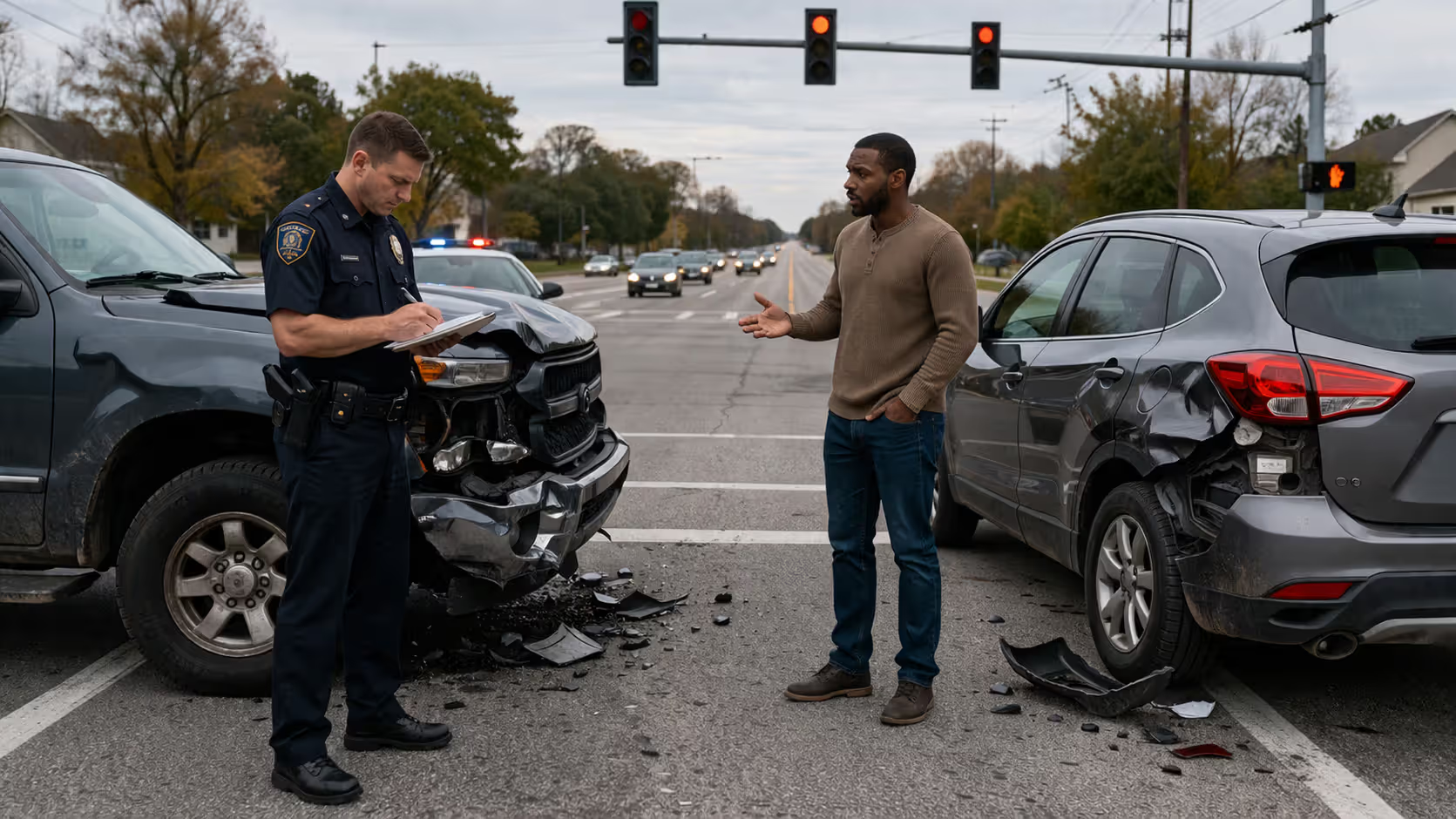
This creates obvious incentives to prove the other driver caused the collision. Police reports carry weight, but so do witness accounts, intersection cameras, and damage patterns on the vehicles. Insurance adjusters review everything before deciding who's responsible.
Indiana applies modified comparative fault when blame isn't clear-cut. Maybe you were speeding, but the other driver failed to yield. Adjusters assign fault percentages. You can only collect damages if you're 50% or less responsible, and whatever you recover gets reduced by your share of blame.
Picture this: an adjuster determines you're 40% at fault in a crash causing $20,000 in damage to your vehicle. You'd receive $12,000 (60% of your loss). If they'd pegged you at 51% responsible instead, you'd get nothing—and your own liability coverage would pay for the other driver's vehicle repairs.
Compare that to Michigan, where your personal injury protection pays your medical bills no matter who caused the crash. In Indiana, establishing fault comes first. Until that's settled, compensation waits.
Uninsured/Underinsured Motorist Coverage Considerations
Recent data from the Insurance Research Council shows roughly one in eight Indiana drivers operates without coverage. When an uninsured driver causes your accident, their nonexistent policy can't compensate you. Your uninsured motorist protection becomes your only financial safety net.
Despite mandatory offering requirements, you can decline UM coverage by signing a waiver. Plenty of drivers do exactly that, shaving perhaps $75 off their semi-annual premium. They're essentially betting every driver who hits them will carry valid insurance. Those aren't great odds when 13% of motorists are uninsured.
Underinsured motorist coverage matters when someone carrying state minimums causes devastating injuries. Say you're hospitalized for three weeks after a severe collision, racking up $150,000 in medical expenses. The at-fault driver carries only the $25,000 minimum per-person coverage. Without UIM protection, you're chasing that $125,000 gap out of your own pocket or through bankruptcy court (where you'll likely recover pennies on the dollar).
Your UM and UIM limits typically mirror your liability limits unless you specifically request different amounts. Rejecting this protection might save you enough for a nice dinner each year. Needing it and not having it could cost you your financial future.
Penalties for Driving Without Insurance in Indiana
First-time offenders face Class A infractions—essentially serious traffic violations carrying fines reaching $500 plus court costs that typically add another $150-$200. The Bureau of Motor Vehicles suspends both your driver's license and vehicle registration for periods lasting up to one year, regardless of whether you've actually been in a crash.
Getting back on the road requires several expensive steps:
- $250 suspension termination fee paid directly to the BMV
- $150 reinstatement fee for license restoration
- SR-22 certificate filing demonstrating you've secured coverage
The SR-22 confuses people because it's not actually insurance—it's a form your insurance company submits to the state proving you're carrying at least minimum required coverage. You'll maintain SR-22 status for three full years. Let your policy lapse for even 24 hours during this period and your insurer notifies the BMV automatically, triggering another suspension cycle.
Premiums typically jump 20-50% once you need SR-22 filing. Insurers categorize drivers with suspensions as high-risk, and that designation sticks around for years, inflating what you pay.
Second violations escalate to Class A misdemeanors—criminal charges punishable by up to one year incarceration and fines reaching $5,000. Most judges impose suspended jail sentences contingent upon maintaining continuous coverage, but repeat violators face progressively stricter consequences including actual jail time.
Cause a crash while driving uninsured and you're personally on the hook for every dollar of damage. The injured parties can sue you in civil court, win judgments, then garnish up to 25% of your take-home pay until the entire debt is satisfied. They can also levy your bank accounts and place liens against any real estate you own.
Author: Brandon Whitaker;
Source: trialstribulations.net
| Violation | First Offense | Second Offense | Third+ Offense |
| Classification | Class A Infraction | Class A Misdemeanor | Class A Misdemeanor |
| Fine | Maximum $500 | Maximum $5,000 | Maximum $5,000 |
| License Suspension | 90 days maximum | Up to 1 year | Up to 2 years |
| Reinstatement Fee | $250 plus $150 | $250 plus $150 | $250 plus $150 |
| SR-22 Requirement | 3 years mandatory | 3 years mandatory | 5 years mandatory |
| Potential Jail Time | None | Maximum 1 year | Maximum 1 year |
Beyond the Minimum: Coverage Options to Consider
State minimums exist to create a legal floor, not to provide robust protection. A moderate two-car accident with injured passengers and totaled vehicles can easily generate $150,000 in claims—triple the bodily injury minimum limit.
Collision coverage handles repairs to your vehicle after crashes, regardless of who caused them. Slide on black ice into a concrete barrier? Collision pays after you meet your deductible. Get hit by someone with no insurance (and you've declined UM property damage)? Collision steps in. Lenders universally require this on financed or leased vehicles.
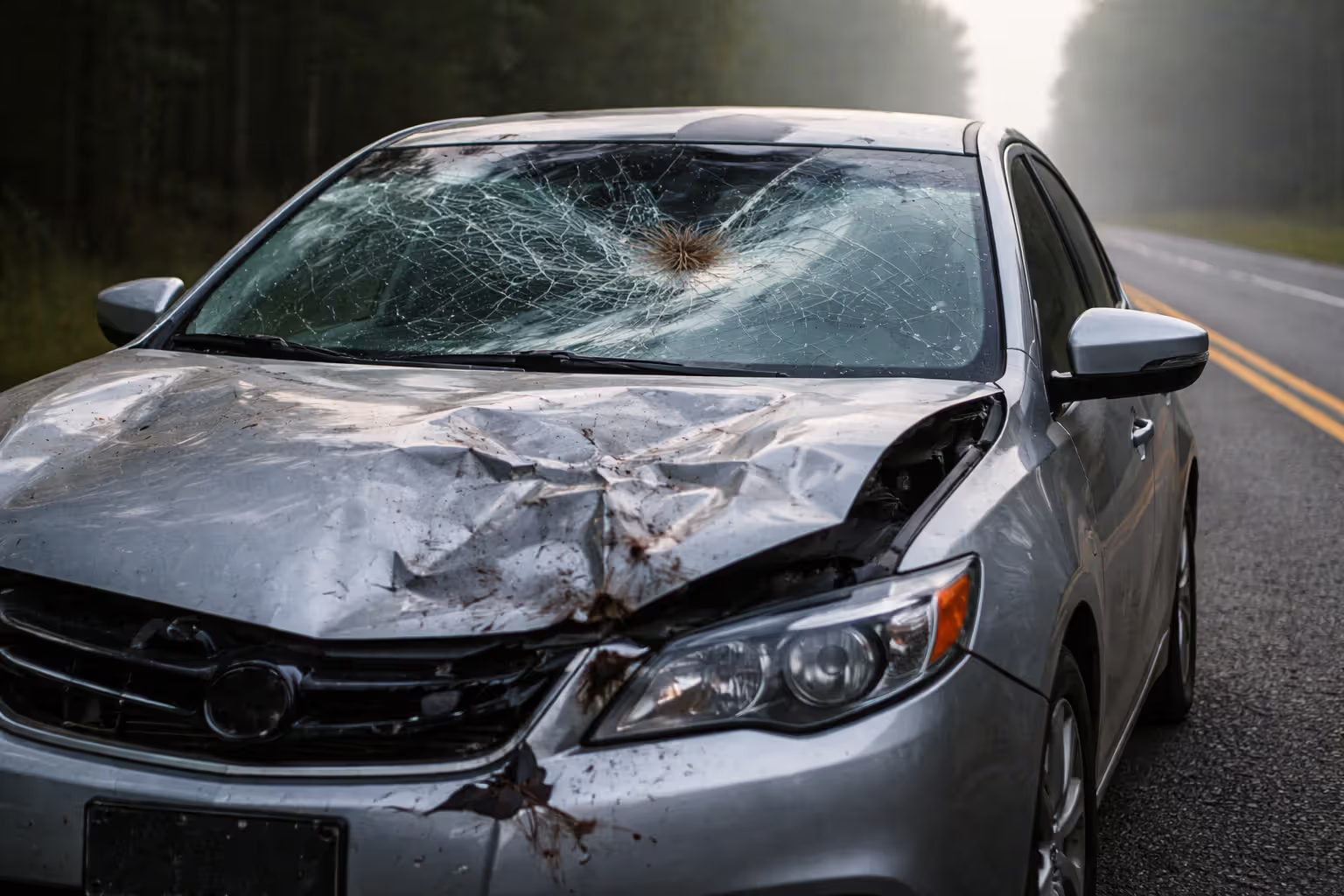
Comprehensive coverage addresses losses having nothing to do with collisions. Thieves steal your car from the grocery store parking lot. Hail shatters your windshield during a June storm. A deer jumps in front of you on State Road 67. Vandals key your paint job. Comprehensive handles all of it, typically for $150-$300 annually with a $500 deductible. Indiana's rural highways see frequent deer strikes, especially during October and November when deer are most active.
Medical payments coverage (MedPay) pays your medical expenses after accidents without considering fault or which driver caused the collision. Common limits run from $1,000 to $10,000. Unlike your health insurance, MedPay carries zero deductible and no copays. It covers ambulance transport, emergency room treatment, surgery, prescriptions, and follow-up physical therapy. For drivers carrying high-deductible health plans, MedPay fills that gap before your major medical coverage activates.
Rental reimbursement coverage provides a rental vehicle while yours is being repaired after a covered loss. Most policies provide $30-$50 daily for up to 30 days. This coverage runs about $20-$40 annually but saves you from being carless for weeks while body shops order parts and complete repairs.
Gap insurance protects drivers who financed or leased their vehicles. When your car gets totaled, your insurer pays its actual cash value at the time of loss. Thanks to depreciation, that's often thousands less than your remaining loan balance. Gap coverage pays that difference, preventing situations where you're making payments on a totaled vehicle.
| Coverage Type | State Minimum | Better Protection | Additional Annual Cost | What You're Missing |
| Bodily Injury | $25,000/$50,000 | $100,000/$300,000 | $150-$300 more | Serious injuries requiring extended care, multiple injured parties, lost income claims |
| Property Damage | $25,000 | $100,000 | $75-$150 more | High-value vehicles, commercial structures, chain-reaction crashes |
| Uninsured Motorist | $25,000/$50,000 | Match your liability | $50-$100 more | Protection when hit-and-run or uninsured drivers injure you |
| Collision | Not mandated | Actual cash value | $400-$800 more | Repairs after crashes you cause or single-vehicle accidents |
| Comprehensive | Not mandated | Actual cash value | $150-$300 more | Theft, weather damage, animal strikes, vandalism |
Author: Brandon Whitaker;
Source: trialstribulations.net
What Affects Your Indiana Auto Insurance Premiums
Insurance companies feed dozens of variables into proprietary algorithms that calculate your premium. Some factors you can control. Others are fixed. Understanding which is which helps you manage costs.
Driving record: Tickets and crashes dramatically alter what you pay. A single speeding citation inflates premiums 15-25% for three years after the conviction date. An at-fault accident raises rates 30-50%. DUI convictions can triple what you pay and mandate SR-22 filing. Most carriers examine the previous three to five years when calculating rates.
Location: Your garaging address matters substantially. Urban areas experiencing frequent accidents, vehicle theft, and vandalism cost more to insure. Indianapolis drivers routinely pay 20-40% more than residents of Lafayette or Bloomington. Your ZIP code's historical claim frequency and severity directly drive your rate.
Vehicle type: Carriers maintain detailed databases tracking repair costs, theft frequency, and safety performance for every make and model. Insuring a Honda Civic costs significantly less than covering a Dodge Charger because Civics rarely get stolen, require inexpensive parts, and aren't involved in high-speed crashes as often. Vehicles equipped with automatic emergency braking, blind-spot monitoring, or lane-keeping assist may qualify for safety discounts.
Credit score: Indiana permits insurers to incorporate credit-based insurance scores into rating. Studies demonstrate statistical correlation between how people manage credit and how frequently they file claims. Drivers with excellent credit might pay 20-50% less than those with poor credit, even if every other factor is identical. Improving your credit score can meaningfully reduce insurance costs.
Coverage limits and deductibles: Purchasing higher liability limits and selecting lower deductibles increases what you'll pay. Raising your collision deductible from $500 to $1,000 might trim $100-$200 off your annual premium. Boosting bodily injury limits from 25/50 to 100/300 adds roughly $150-$300 yearly.
Annual mileage: Someone commuting 35 miles each way to work pays more than someone driving 4,000 miles annually. More highway exposure correlates with higher accident probability. Several insurers now offer usage-based programs that track your actual mileage and driving patterns through smartphone apps or devices that plug into your OBD-II port, potentially saving careful drivers 10-30%.
Average Premium Costs Across Indiana Cities
Statewide averages run approximately $1,100 yearly for full coverage and $450 for bare-minimum liability. Location creates substantial variance:
- Indianapolis: $1,350 full coverage / $525 minimum liability
- Fort Wayne: $1,150 full coverage / $475 minimum liability
- Evansville: $1,200 full coverage / $490 minimum liability
- South Bend: $1,250 full coverage / $500 minimum liability
- Bloomington: $1,050 full coverage / $425 minimum liability
- Lafayette: $1,000 full coverage / $400 minimum liability
These figures assume a 35-year-old driver with clean history. Drivers under 25 often pay double or triple. Anyone with accidents or violations pays substantially more.
How to Maintain Compliance and Avoid Lapses
Insurance lapses trigger immediate problems. Indiana's electronic verification system lets law enforcement check your coverage status in real time during any traffic stop. The BMV also conducts random compliance sweeps and mails suspension notices when their database shows gaps in coverage.
Set up automatic payments: Missing a premium payment by one day can cancel your entire policy. Autopay from your checking account ensures uninterrupted protection. Switch banks or payment methods? Update your insurer the same day, or you'll miss your next payment.
Maintain continuous coverage: Even brief gaps damage your insurance history. Carriers charge substantially higher rates to drivers with coverage interruptions, viewing them as elevated risks. Selling a vehicle? Don't cancel your policy—transfer coverage to your replacement vehicle or maintain a non-owner policy to preserve your continuous coverage track record.
Understand grace periods: Most carriers provide 10-30 day grace periods for late payments before canceling coverage. However, you're technically uninsured during this window. Have an accident during the grace period? Your claim might get denied entirely.
Keep proof accessible: Store your insurance card in your glove compartment and save a digital copy on your phone. Indiana accepts electronic proof, but your phone needs to be accessible. During traffic stops, announce you're retrieving your phone to display insurance before reaching for it, preventing misunderstandings.
Notify your insurer about address changes: Your premium partly depends on where you park overnight. Moving without updating your address can void coverage entirely. Carriers may deny claims after discovering you've been residing at an address different from your policy declarations.
Report accidents promptly: Most policies mandate notification within 24-72 hours after accidents, even when you don't plan to file claims. Delayed reporting can jeopardize your coverage.
I've witnessed too many Indiana families facing financial devastation because they carried only minimum liability limits. A serious accident can generate half a million dollars in medical expenses and lost wages. When your $50,000 policy limit runs out, everything you've built—your home, your savings, your future earnings—becomes vulnerable to lawsuits. Adequate liability coverage represents the most important financial protection most people never consider until catastrophe strikes.
— Jennifer Martinez, licensed insurance agent and owner of Hoosier Insurance Advisors in Carmel.
Common Mistakes Indiana Drivers Make with Insurance Coverage
Assuming minimum coverage provides adequate protection: Those 25/50/25 limits were established decades ago and haven't kept pace with healthcare inflation or vehicle values. A moderate injury requiring surgery, hospital stay, and physical therapy frequently exceeds $25,000. Totaling a three-year-old SUV often surpasses $25,000 in property damage. Exhaust your liability limits and you're personally responsible for everything above them.
Dropping coverage during financial hardship: When money gets tight, some drivers reduce coverage or cancel policies completely. This gambles everything on not having accidents. A single at-fault crash can generate judgments requiring decades to repay. The few hundred dollars saved annually becomes meaningless against potential six-figure personal liability.
Misunderstanding what liability protects: Many drivers think liability coverage mainly protects their vehicle. Actually, it protects everything you own and will earn. Cause serious injuries with insufficient coverage and injured parties can sue you personally, seizing your savings, placing liens on your home, and garnishing your wages for years. Liability coverage is lawsuit protection, not just accident coverage.
Failing to update policies after major life changes: Marriage, adding teenage drivers, purchasing vehicles, or relocating all affect your coverage needs and premiums. Don't add your 16-year-old to your policy? Carriers may deny coverage entirely if your teen has an accident. Insurers can void policies completely for material misrepresentation.
Rejecting uninsured motorist protection without understanding the consequences: Many people decline UM coverage without grasping they're gambling every driver who hits them will carry sufficient insurance. With one in eight Indiana drivers operating uninsured, those odds aren't favorable.
Never shopping around: Premiums vary dramatically between companies for identical coverage. The cheapest carrier for one driver might be the priciest for another based on how each company weights rating factors. Obtaining quotes from three or more insurers every two years ensures you're not overpaying out of inertia.
Expecting age-based rate reductions automatically: While premiums typically decrease as drivers age and gain experience, carriers don't always apply these reductions without prompting. Contact your insurer at milestone birthdays (25, 30, 50) to verify you're receiving appropriate age-based discounts.
Frequently Asked Questions About Indiana Insurance Requirements
Protecting Yourself on Indiana Roads
Meeting Indiana insurance requirements means more than dodging tickets and suspensions. The right coverage protects your financial future when crashes happen. State minimums create a legal floor, not adequate protection for most drivers.
Review your policy at least annually. As vehicles age, you might adjust physical damage coverages. As your assets grow, increase liability limits accordingly. Major life changes—marriage, new household drivers, vehicle purchases—all warrant immediate coverage reviews.
Compare quotes from multiple carriers every two years. Rating factors and company pricing strategies shift constantly. The insurer offering competitive rates five years ago might not be your best option today.
Maintain continuous coverage without gaps, pay premiums on schedule, and keep your insurer informed about address changes and household drivers. These simple habits prevent suspensions and keep rates reasonable.
Most critically, understand insurance protects more than your vehicle—it safeguards everything you own and everything you'll earn throughout your lifetime. The premium difference between minimum coverage and adequate protection is modest compared to the financial catastrophe of being underinsured during a serious accident.