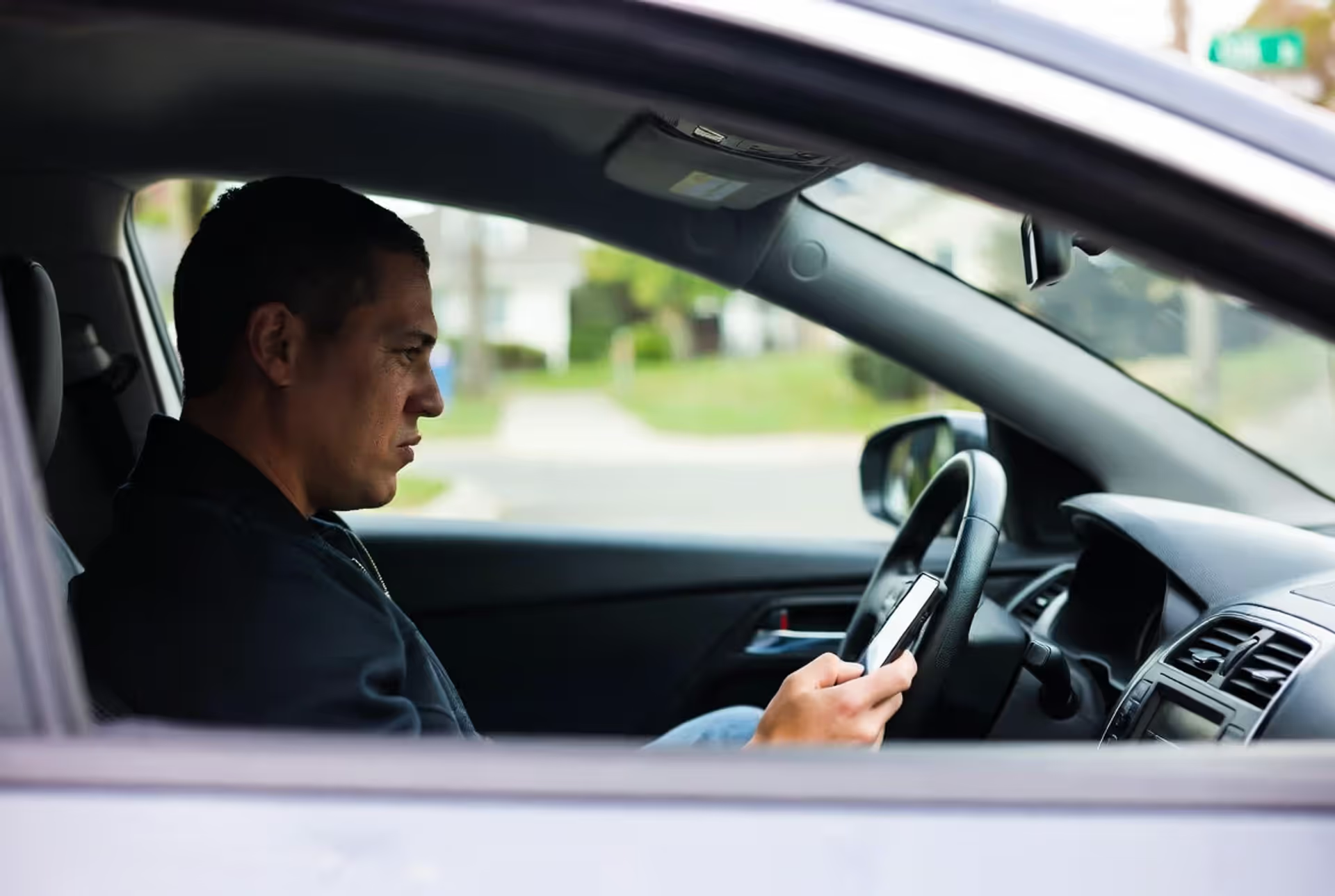
Insurance compliance starts before every drive
Ohio Car Insurance Requirements Guide for Minimum Coverage and Compliance

Content
Want to register a vehicle in Ohio? You'll need proof you can pay for damage if you crash into someone. For most drivers, that means buying an auto insurance policy that meets the state's liability minimums—numbers that haven't changed in years despite the fact that a fender-bender now costs what a serious wreck did a generation ago.
The Bureau of Motor Vehicles tracks coverage through automated systems that flag lapses within days. Traffic cops verify insurance status during routine stops using real-time databases. And if you cause a collision without adequate coverage, you could be writing checks to injured parties for the next decade.
Here's what the law actually requires, why those requirements leave gaping holes in your financial safety net, and how to avoid the costly mistakes Ohio drivers make every day.
Minimum Liability Coverage Mandated by Ohio Law
Ohio uses a tort system for auto accidents. Translation: whoever caused the crash pays for the damage. Your insurance company covers the other guy's losses—their medical bills, their repair costs, their lost paychecks. Your own injuries and vehicle damage? That's your problem unless you buy additional coverage.
Bodily Injury Liability Limits per Person and per Accident
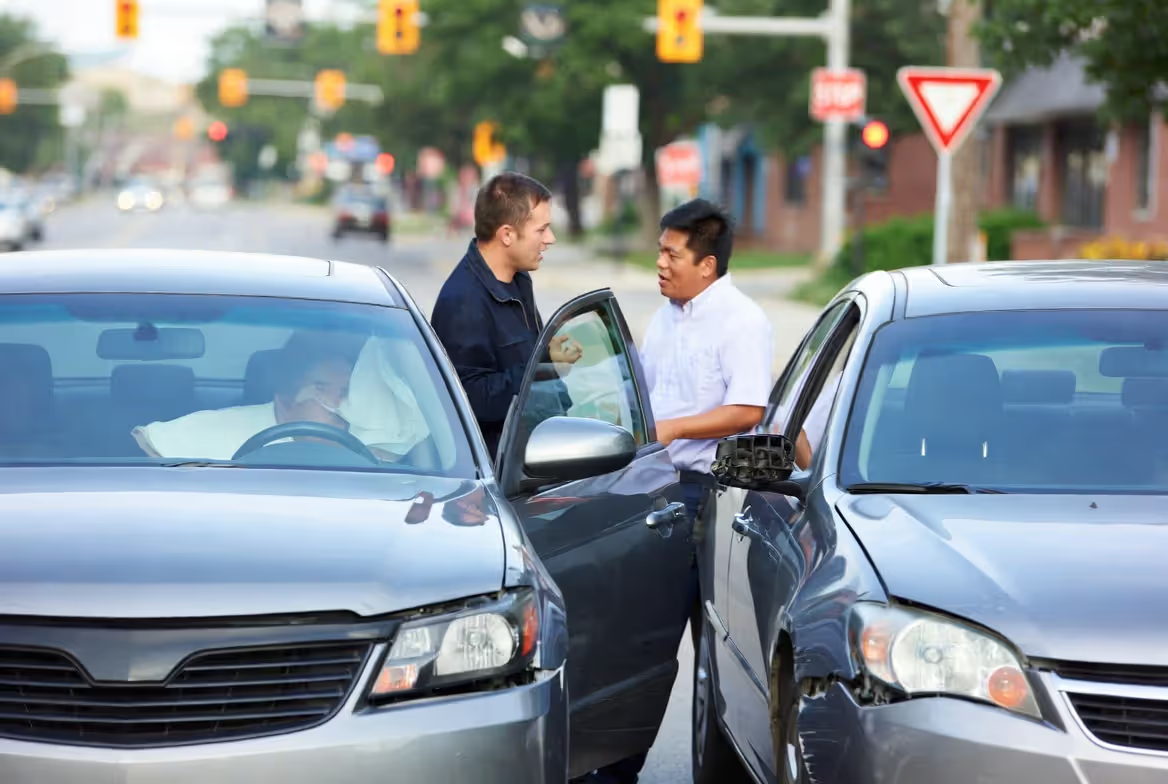
The law requires $25,000 per person and $50,000 per accident in bodily injury liability. When you T-bone another car and send the driver to the hospital, your insurer cuts checks up to $25,000 for that person's expenses. Hurt three people? Your policy stops paying at $50,000 total, even if each victim has $40,000 in medical bills.
That 25/50 split looked reasonable when Ohio set these minimums decades ago. Today, it's a liability time bomb. Emergency departments charge $15,000 for evaluating and treating moderate injuries—before imaging, specialists, or follow-up care. Break someone's leg badly enough to require surgery and six weeks off work? You're looking at $60,000 minimum between medical costs and wage replacement.
Once your policy limit runs dry, attorneys come after your bank account, your house, your future earnings. Judgment creditors can garnish 25% of your wages until the debt is satisfied. That could mean years of reduced paychecks because you skimped on coverage to save $30 a month.
Author: Calvin Prescott;
Source: trialstribulations.net
Property Damage Liability Minimums
Ohio mandates $25,000 in property damage liability. This pays for vehicles, buildings, guardrails, utility poles, and other property you destroy in a crash. Total a new Toyota Highlander (average price $43,000) and your policy covers the first $25,000. The owner's attorney will pursue you personally for the remaining $18,000.
Property damage claims pile up fast in multi-vehicle accidents. Damage three cars in a chain-reaction crash on I-71? Even if none is totaled, repair bills for modern vehicles with sensors, cameras, and aluminum body panels easily exceed $25,000 combined. Add a damaged highway sign ($8,000), guardrail repairs ($12,000), and you've blown through your limit before addressing anyone's injuries.
Comparison Table: Ohio Minimums vs. Neighboring States
| State | Bodily Injury per Person | Bodily Injury per Accident | Property Damage | Recommended Coverage |
| Ohio | $25,000 | $50,000 | $25,000 | 100/300/100 |
| Pennsylvania | $15,000 | $30,000 | $5,000 | 100/300/100 |
| West Virginia | $25,000 | $50,000 | $25,000 | 100/300/100 |
| Kentucky | $25,000 | $50,000 | $25,000 | 100/300/100 |
| Indiana | $25,000 | $50,000 | $25,000 | 100/300/100 |
| Michigan | $50,000 | $100,000 | $10,000 | 250/500/100 |
Insurance agents typically recommend 100/300/100 limits—$100,000 per person, $300,000 per accident, $100,000 property damage. This provides actual protection against real-world accident costs without breaking your budget. Most carriers charge $20–$40 more monthly for these higher limits, which works out to roughly one dinner out per month in exchange for avoiding financial devastation.
We see drivers every week who thought $25,000 would be enough, then they cause a serious injury crash and face garnishment for years. The extra $300 a year for higher limits is the best financial protection most people never think about until it's too late.
— Michael Trent, an independent insurance agent in Columbus.
Proof of Insurance and Compliance Rules for Ohio Drivers
Every time you slide behind the wheel, Ohio law says you need proof of coverage within reach. The BMV also runs random audits, sending verification letters to registered owners. Toss that letter in the trash unopened? Your license gets suspended automatically, no hearing required.
Author: Calvin Prescott;
Source: trialstribulations.net
Acceptable Documentation During Traffic Stops
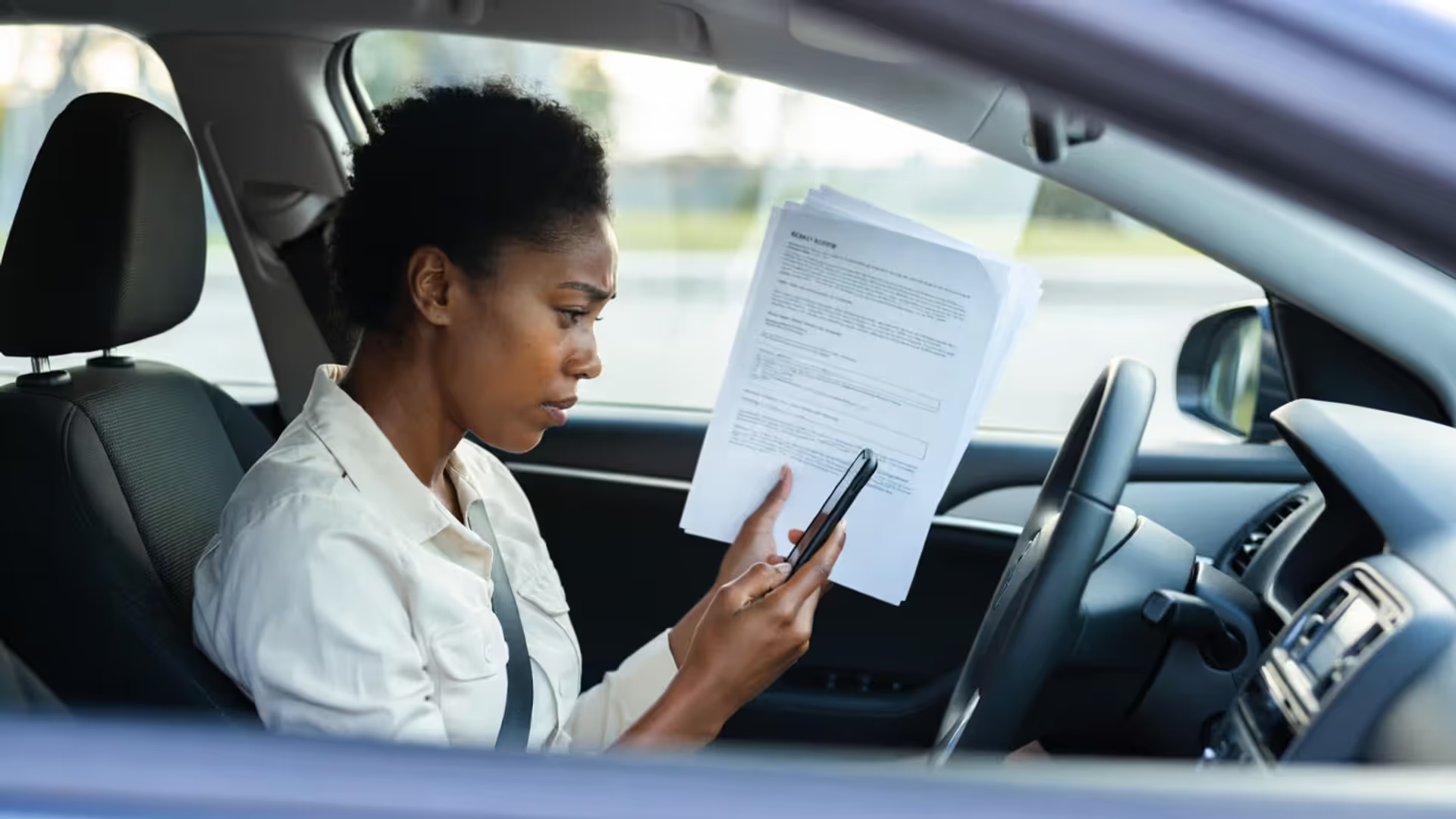
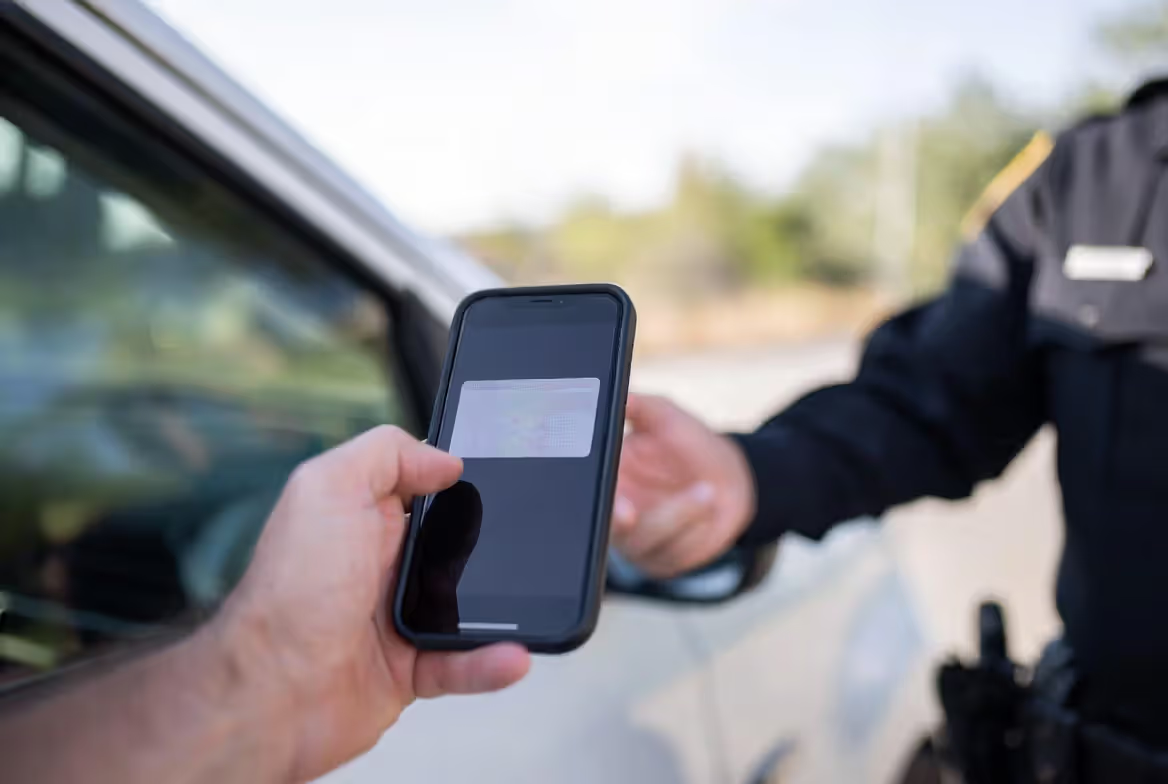
Traffic cops accept three forms of proof when they pull you over:
- The insurance card your company mailed you (even if it's months old, as long as coverage is current)
- Your phone displaying your carrier's app or a photo of your current card (Ohio explicitly allows digital proof)
- Your policy's declaration page showing active coverage dates
Here's the catch: your proof must show coverage active on today's date. Flash an expired card because you haven't received the new one yet? That's a citation, even if you've paid your premium and coverage never lapsed. Officers run your plate through Ohio's Insurance Verification System, which updates continuously as carriers report policy changes.
The system flags mismatches between your registration and your insurance. Register your Honda Civic but show proof for your old Nissan Altima you traded last month? Prepare for a lengthy roadside conversation while the officer sorts out whether you actually have valid coverage.
SR-22 and FR-19 Filing Requirements
An SR-22 isn't insurance—it's paperwork your insurance company files with the BMV proving you're carrying at least minimum liability coverage. Think of it as your insurer tattling to the state every month: "Yes, this high-risk person still has a policy with us."
The BMV orders SR-22 filing after these violations:
- DUI or OVI convictions (including first offense)
- Getting caught driving without any insurance
- Stacking up multiple at-fault crashes in a short window
- Certain license reinstatements after child support suspensions or other administrative actions
Your carrier charges a one-time filing fee, usually $25–$50, then monitors your account for three years. Let your policy lapse for even a single day during this period? Your insurer instantly notifies the BMV, triggering immediate license suspension. No grace period. No warning. Just suspended.
FR-19 certificates work similarly but apply to self-insured drivers or those posting bonds instead of buying traditional insurance. The financial requirements are steep enough that almost nobody uses this option—think proving you have liquid assets exceeding $75,000 available to pay claims.
Switching insurance companies while under SR-22 monitoring requires precision timing. Your new insurer must file the SR-22 before your existing policy expires. Even a one-day gap restarts the three-year clock and suspends your license until you fix it.
Penalties for Driving Without Insurance in Ohio
Ohio treats uninsured driving as a serious violation with consequences that compound rapidly. The BMV's automated systems make it nearly impossible to fly under the radar—they catch most lapses within 48 hours.

Author: Calvin Prescott;
Source: trialstribulations.net
First Offense vs. Repeat Violations
Get cited for driving without insurance for the first time and expect:
- Fine up to $150 (plus court costs that typically add $100–$200)
- Immediate license suspension effective until you prove you've obtained coverage
- Possible vehicle impoundment if the officer feels generous enough to not make you walk home
- SR-22 filing requirement added to your record
Second and subsequent offenses within three years escalate dramatically:
- Fines jumping to $1,000
- License suspension lasting up to one year
- Vehicle immobilization using a "boot" or outright forfeiture
- Mandatory SR-22 filing for three years once you finally get your license back
Judges have discretion to increase penalties if your uninsured driving contributed to a crash or occurred alongside other violations like excessive speeding or reckless operation. Cause injury while driving uninsured? You're potentially looking at criminal charges beyond simple traffic citations.
License Suspension Process and Reinstatement Fees
The BMV suspends your license automatically when your insurance company reports a cancellation or you ignore a compliance verification letter. You'll receive a notice by mail explaining why you're suspended and what you need to do to fix it.
Getting your license back requires these steps:
- Buy valid insurance meeting Ohio's minimums
- Keep that coverage active for six consecutive months before applying for reinstatement (required for certain violations)
- Pay reinstatement fees ranging from $50 for minor administrative suspensions up to $650 for serious violations
- Submit SR-22 filing if the suspension triggers that requirement
- Clear any outstanding fines, court costs, or child support arrears
That six-month waiting period surprises most drivers. You can't just buy insurance the day before you visit the BMV and expect to walk out with your license. The state wants proof you maintained continuous coverage for the full period. Some insurers provide "prior insurance letters" documenting your coverage history, but you actually need to keep paying those premiums the entire time.
Reinstatement fees are non-negotiable and non-refundable. Multiple simultaneous suspensions? You'll owe separate fees for each before the BMV restores full privileges.
How Ohio's Insurance Laws Affect You After an Accident
Ohio's tort system puts the financial burden on whoever caused the crash. But those minimum coverage requirements create enormous gaps that hurt both victims and at-fault drivers.
Author: Calvin Prescott;
Source: trialstribulations.net
At-Fault Rules and Minimum Coverage Gaps
Cause a collision and your liability coverage pays the other party's losses up to your policy limits. When their bills exceed what your insurance covers, they hire an attorney to collect the difference directly from you.
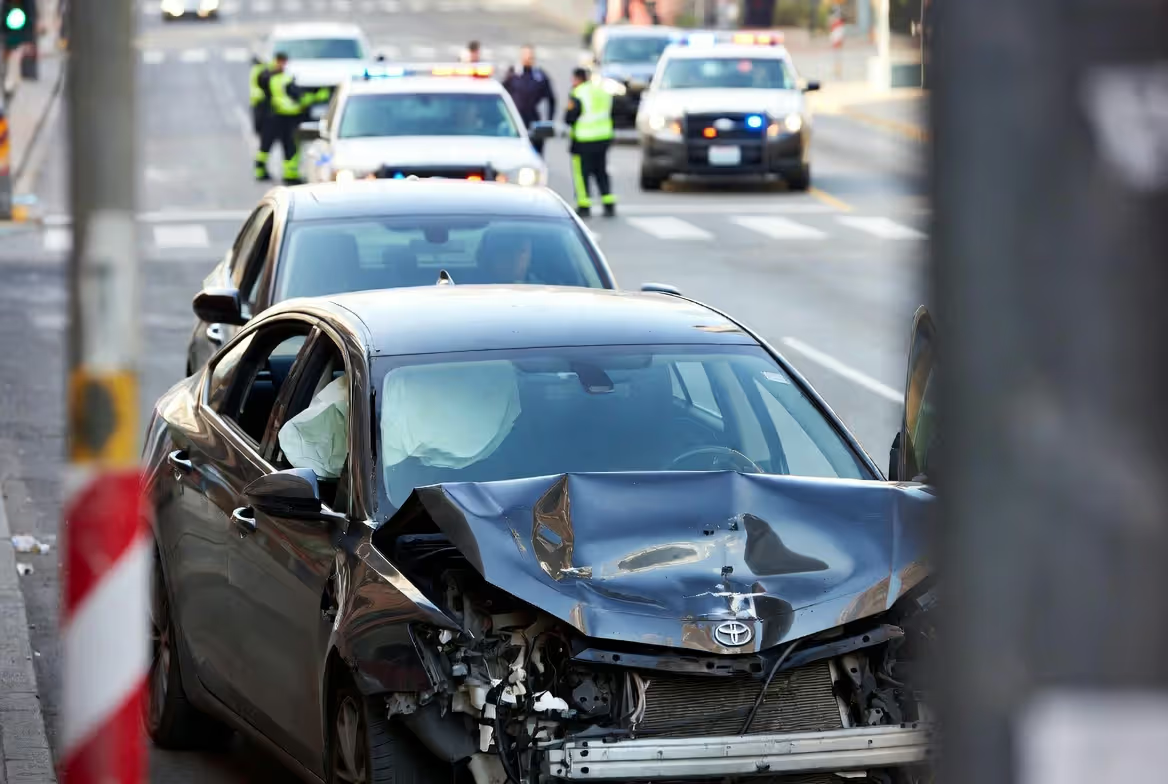
Picture this scenario: You're rushing to work and run a red light at a busy suburban intersection, slamming into a minivan carrying a young family. Two adults suffer serious injuries requiring hospital stays, surgery, and months of physical therapy. Medical bills hit $120,000. Lost wages from missed work add another $35,000. Pain and suffering claims push the total to $200,000.
Your 25/50/25 policy pays its $50,000 per-accident maximum and stops. The injured parties' attorney files suit against you personally for the remaining $150,000. They obtain a judgment, place liens on your property, and garnish your wages. That judgment follows you for years, accruing interest, until it's satisfied.
Now flip the script. Someone with minimum coverage crashes into you, and your damages total $80,000. Their insurance pays $50,000 maximum. Getting the remaining $30,000 means suing them personally, spending months or years in litigation, and potentially collecting nothing if they lack significant assets. Many at-fault drivers who carry only minimums don't own homes, have substantial savings, or earn wages high enough to make garnishment worthwhile.
Uninsured Motorist Protection (Optional but Important)
Ohio doesn't force you to buy uninsured/underinsured motorist coverage (UM/UIM), but your insurance company must offer it. Declining this protection requires your written signature—insurers want proof you understood what you were giving up.
UM/UIM coverage protects you when:
- The at-fault driver carries no insurance whatsoever
- Their coverage limits fall short of your actual damages
- You're injured in a hit-and-run and police never identify the other driver
UM/UIM limits typically mirror your liability coverage. Choose 100/300/100 liability? You can buy matching UM/UIM protection. When an uninsured driver injures you, your own insurer pays your medical bills, lost wages, and pain and suffering up to your UM/UIM limits.
Roughly 14% of Ohio drivers operate vehicles without any insurance, according to Insurance Research Council data. Urban areas like Cleveland, Toledo, and Cincinnati see even higher percentages—sometimes exceeding 20%. Declining UM/UIM coverage to pocket $100 annually leaves you vulnerable when one of these uninsured drivers inevitably hits you.
The coverage costs less than you'd expect—typically $50–$150 yearly—because your insurer only pays when another driver is both at-fault and underinsured. You're not filing claims against your own UM/UIM coverage for fender-benders you caused.
Factors That Influence Your Car Insurance Premiums in Ohio
Insurance companies feed dozens of variables into proprietary algorithms that calculate your premium. Understanding how these factors work helps you manage costs and avoid nasty surprises.
How Violations and Claims History Impact Rates
Tickets and accidents tell insurers you're likely to generate future claims. Each violation triggers rate increases that stick around for years:
- DUI/OVI: Expect premiums to double or triple; many insurers cancel your policy outright
- At-fault crash: Rates jump 20%–50%, with the increase lasting three to five years
- Speeding citations: Increases of 10%–25% depending on how fast you were going and how many tickets you've accumulated
- Driving without insurance: Premiums spike 30%–100% plus mandatory SR-22 requirements
Violations stay on your Ohio driving record for three years, though insurers may hold them against you for up to five years when calculating premiums. Stack multiple violations and the impact multiplies—two speeding tickets plus an at-fault accident can triple your rates or make you uninsurable through standard carriers.
Even not-at-fault claims affect your rates over time. File three comprehensive claims (theft, vandalism, hail damage) within a couple years and insurers start viewing you as unlucky or careless. The rate impact is smaller than at-fault accidents, but it's real.
Geographic and Demographic Rating Variables
Where you park your car overnight and demographic factors you can't control dramatically affect what you pay:
Location matters enormously: Cleveland drivers pay 30%–50% more than residents of rural Appalachian counties. Cities have more traffic, more theft, higher repair costs, and more accident-prone drivers per square mile. Even within the same city, your ZIP code matters. Park on the street in a neighborhood with high theft rates versus garaging your car in the suburbs? That's a 15%–25% difference.
Age hits young drivers hard: Under-25 drivers pay double or triple what middle-aged drivers pay. Crash statistics show younger drivers cause more accidents, so insurers charge accordingly. Rates decline steadily through your 30s, 40s, and 50s, bottoming out around age 55. After 65, rates tick upward slightly as reaction times slow and accident rates creep back up.
Credit-based insurance scores: Ohio allows insurers to factor your credit history into premium calculations. Poor credit can increase your rates 20%–50% compared to someone with excellent credit but an otherwise identical profile. This practice sparks controversy—consumer advocates argue it unfairly penalizes low-income drivers who may be responsible behind the wheel but struggled financially. Insurance companies counter that decades of claims data show strong correlations between credit behavior and insurance losses.
Annual mileage and commuting patterns: Drive 25,000 miles yearly commuting to work versus 7,000 miles working from home? That difference affects your premium. More miles means more exposure to potential accidents. Some insurers now offer usage-based programs that track your actual driving through smartphone apps or plug-in devices, adjusting rates based on miles driven, time of day, and driving behaviors.
Vehicle characteristics: Insuring a new loaded Chevy Tahoe costs more than a ten-year-old Honda Civic. Repair costs, theft attractiveness, safety ratings, and replacement values all factor into pricing. Vehicles popular with thieves (certain Honda and Toyota models) cost more to insure. Cars with advanced safety features may qualify for discounts.
Every insurance company weighs these variables differently using proprietary formulas. That's why quotes vary wildly between carriers—one company might penalize your speeding ticket heavily while another focuses more on your credit score. Shopping around every couple years often uncovers significant savings as your circumstances change and different insurers' algorithms favor your updated profile.
Common Mistakes Ohio Drivers Make With Coverage
Even experienced drivers who've carried insurance for decades make preventable errors that create coverage gaps or waste money unnecessarily.
Sticking with state minimums too long: The biggest mistake Ohio drivers make is assuming 25/50/25 coverage provides meaningful protection. Those limits might have made sense in 1985. Today they're woefully inadequate for any accident beyond the most minor fender-bender. The premium difference between minimums and adequate coverage rarely exceeds $400 annually—less than you spend on streaming services. Yet drivers risk hundreds of thousands in personal liability to save $35 monthly.
Creating coverage gaps between vehicles: You sell your car and plan to buy a replacement in two or three weeks. Canceling insurance during that gap seems logical—why pay for a car you don't own? Huge mistake. That coverage lapse shows up on insurance reports and increases your future premiums by 30% or more. Worse, if you have a loan or lease on the new vehicle, lenders often require proof of continuous coverage. Smart move: ask your insurer about "lay-up coverage" that maintains your policy at reduced cost while you're between vehicles.
Misunderstanding rental car coverage: Your Ohio policy's liability coverage typically extends to rental cars, protecting you if you cause an accident. But collision and comprehensive coverage? That depends on your specific policy language and the rental situation. Some policies cover physical damage to rentals; others don't. Rental companies push damage waivers costing $15–$30 daily. Before accepting or declining, actually read your policy or call your agent. You might already have coverage, or you might need the waiver to avoid paying $5,000 for repairing a rental car's scraped bumper.
Forgetting to update policies after major life changes: You get married, divorced, or add a teenage driver to your household. You move from rural Ohio to Columbus. You buy a new car with advanced safety features. Each of these changes affects your coverage and rates. Failing to notify your insurer can result in denied claims—imagine your spouse gets in an accident driving your car, but you never added them to the policy. Or you miss out on discounts for safety features because your insurer doesn't know about them.
Assuming personal auto insurance covers business use: Drive for Uber, DoorDash, or Instacart? Use your vehicle for real estate showings or delivery work? Your personal auto policy almost certainly excludes coverage during business activities. Get into an accident while logged into a rideshare app and your insurer may deny the claim entirely. You need commercial auto coverage or a rideshare endorsement. These cost extra but prevent catastrophic coverage denials.
Ignoring BMV compliance notices: The BMV sends random insurance verification letters to registered owners. These arrive by mail with deadlines for responding with proof of coverage. Many drivers assume these are junk mail and toss them. The BMV suspends your license automatically when the deadline passes. Even though you have valid insurance, you now face reinstatement fees and hassle because you didn't respond to the letter.
Frequently Asked Questions About Ohio Car Insurance Requirements
Making Smart Decisions About Your Ohio Auto Insurance
Ohio's mandatory liability minimums create a legal floor, not a ceiling of adequate protection. Those 25/50/25 requirements date back to an era when medical costs were a fraction of today's expenses and vehicles were simpler, cheaper to repair, and less expensive to replace. Carrying only these minimums satisfies the law but exposes you to financial catastrophe the moment you cause any accident beyond a parking lot tap.
Bumping your liability limits to 100/300/100 and adding uninsured motorist coverage costs a few hundred dollars more per year but provides exponentially better protection against lawsuits, wage garnishment, and personal bankruptcy. When comparing quotes, look beyond the premium to consider the coverage gaps that could cost you six figures out of pocket after a serious crash.
Keep your coverage active continuously to avoid license suspension, reinstatement fees that can exceed $650, and premium increases that last for years. Respond promptly when the BMV sends compliance verification letters—ignoring that mail triggers automatic suspension even when you have valid coverage. Shop rates every 12–24 months because insurers constantly adjust their pricing algorithms and you may qualify for better rates as your circumstances evolve.
The right coverage protects your assets, preserves your driving privileges, and shields your financial future from devastating liability claims. Understanding Ohio's requirements is step one. Choosing adequate protection—not just bare minimums—is the decision that pays massive dividends when you need it most.