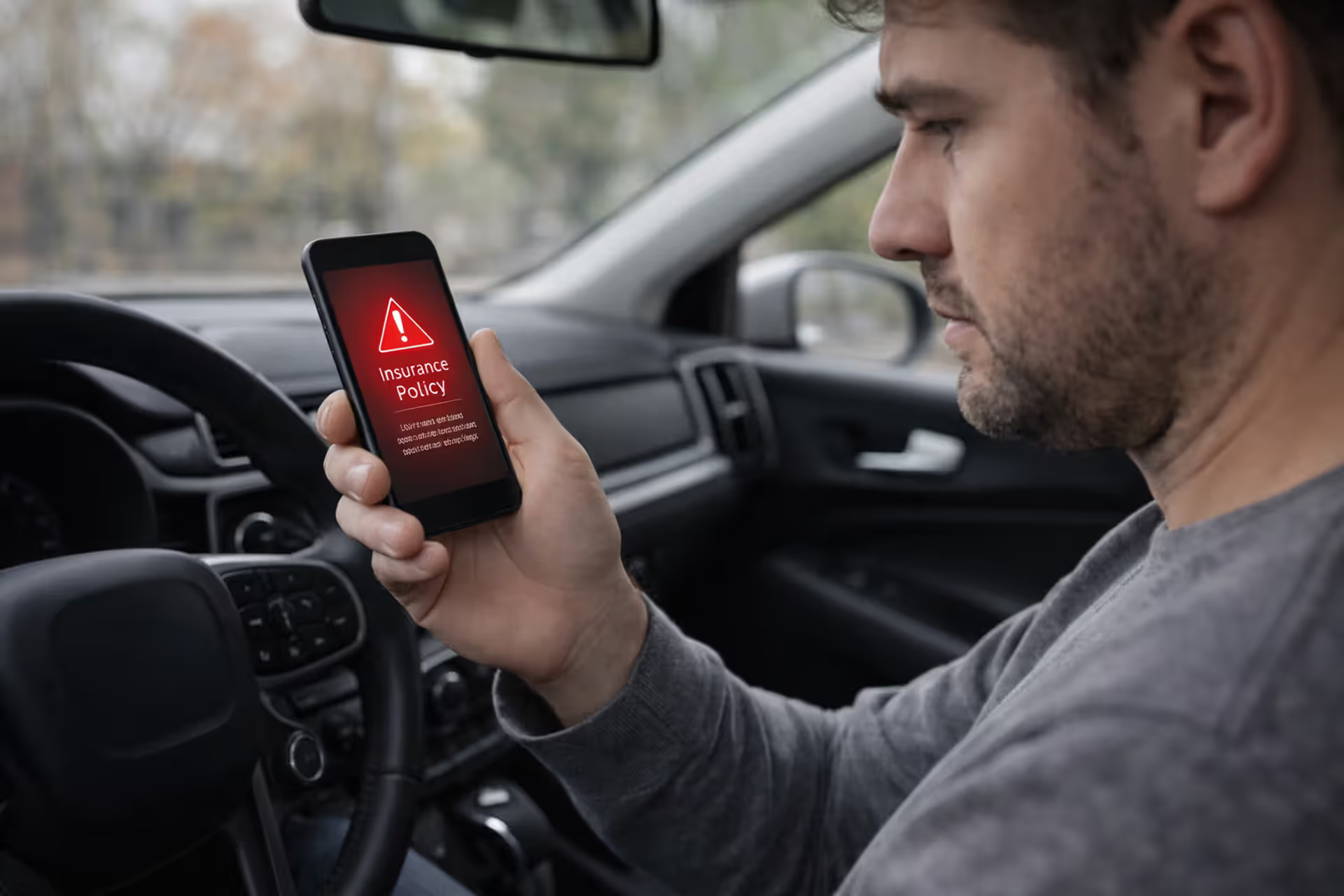
Insurance lapse can trigger serious consequences fast
Alabama Car Insurance Laws Coverage Requirements Guide

Content
Skip an insurance payment on your Alabama vehicle, and within days the state's real-time monitoring system flags your registration. What seems like a minor lapse—maybe you're between jobs or forgot to update payment info—triggers an automatic chain reaction: warning letters, suspended registration, and eventually a revoked license. Meanwhile, your next insurer will charge you double (or more) for years because of that gap. Alabama doesn't mess around with uninsured motorists, and the financial consequences reach far beyond the original missed premium.
What Drivers Must Carry: Alabama's Minimum Coverage Standards
Alabama requires three specific liability numbers that you'll see written as 25/50/25. Here's what those figures actually mean when you're involved in a crash where you're at fault:
The first $25,000 represents your maximum payout for any single person's injuries. One victim in the other vehicle breaks their leg? This covers their ambulance ride, surgery, rehab sessions, and lost wages—up to that $25,000 cap.
The second $50,000 sets your total exposure when multiple people get hurt in one accident. Rear-end a car carrying four passengers and injure everyone? Your insurer pays medical costs for all of them combined, but stops at fifty grand total.
The third $25,000 handles property destruction—the sedan you crumpled, the fence you demolished, or that vintage motorcycle you clipped. Modern SUVs and trucks frequently cost more than this to replace, leaving you personally responsible for the difference.
Every medical expense, from initial ER treatment through months of physical therapy, comes out of that per-person limit if you caused the collision. The aggregate limit for multiple victims gets consumed shockingly fast in serious wrecks. Property damage includes everything from other vehicles to damaged buildings, landscaping, even guardrails and utility poles.
Alabama goes one step further with a mandate most drivers don't anticipate: matching uninsured motorist protection at those identical 25/50 levels. Approximately 14% of Alabama motorists drive without coverage, which means when they cause your accident, your own uninsured motorist policy handles your medical expenses. State law lets you reject this protection by signing a specific waiver, though doing so leaves you completely vulnerable to the one-in-seven chance of getting hit by an uninsured driver.
These requirements apply across the board—sedans, pickup trucks, motorcycles, SUVs. Commercial vehicles and certain business use vehicles face higher minimum thresholds. Neither comprehensive (covering theft, vandalism, storm damage) nor collision (repairing your vehicle after crashes) appears in Alabama's mandatory lineup, though lenders virtually always require both until you've paid off the loan.
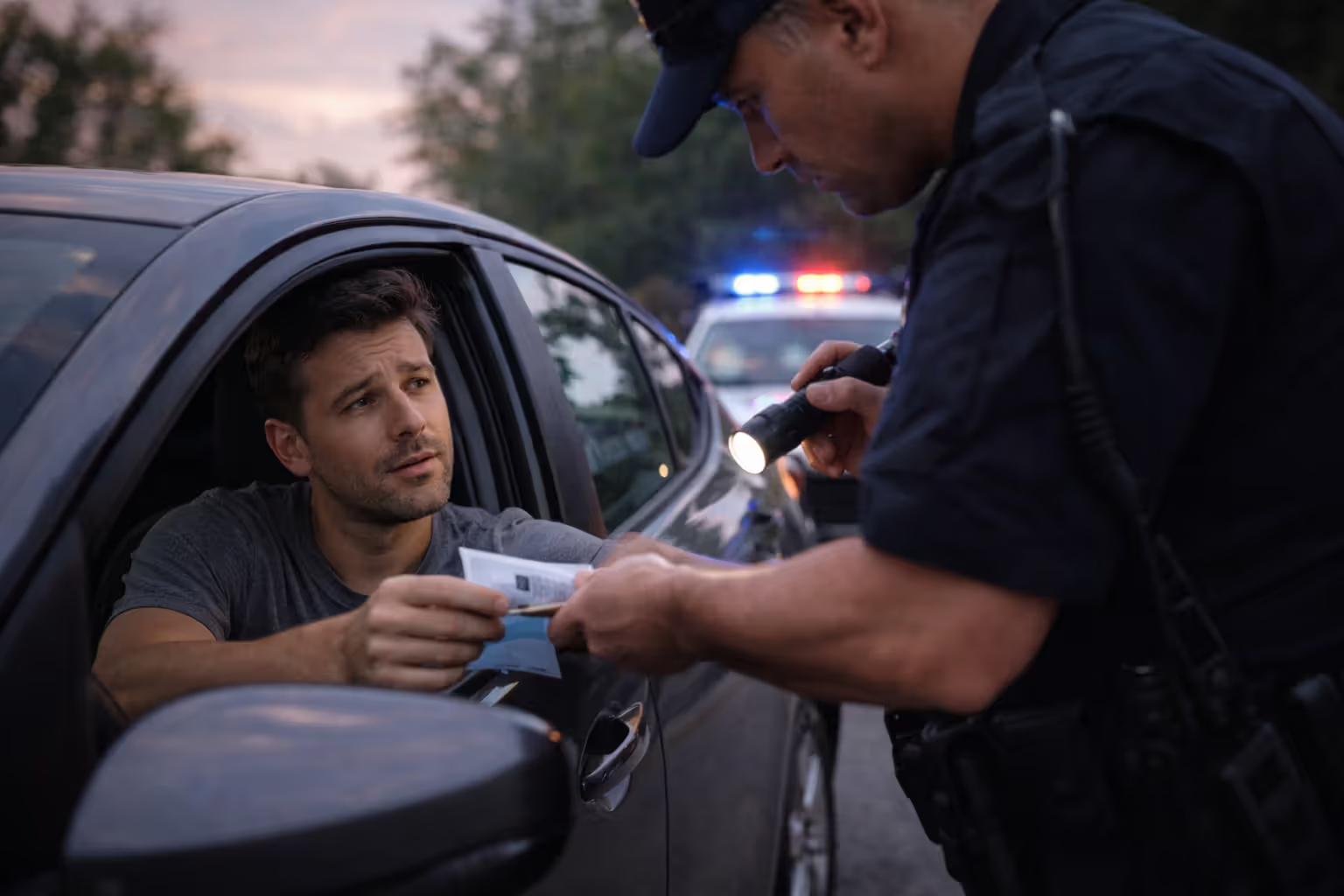
Law enforcement accepts digital proof on your smartphone, printed cards, or electronic wallet displays. Officers can verify your insurance status instantly through the state database anyway, so attempting to use fraudulent documents compounds your legal problems.

Author: Brandon Whitaker;
Source: trialstribulations.net
Penalties for Driving Without Insurance in Alabama
The first time authorities catch you operating a vehicle without insurance coverage, you face a base fine of $500—that's before court costs, administrative fees, or any other charges. Your driving privileges get suspended immediately. Registration for that vehicle gets pulled. You'll need to file SR-22 certificates demonstrating you've obtained coverage and maintained it continuously.
A second violation within three years pushes penalties past $1,000, potentially includes jail time, and extends suspension periods considerably. Alabama doesn't distinguish between vehicles you own—once suspended, you cannot legally operate anything from a motorcycle to a borrowed car. Each separate offense adds compounding fees for license reinstatement, fresh registration, and replacement license plates.
Author: Brandon Whitaker;
Source: trialstribulations.net
How Alabama Tracks Uninsured Drivers
The Alabama Law Enforcement Agency maintains continuous electronic surveillance of every registered vehicle statewide. Insurance carriers report directly into this system—new policies, cancellations, coverage gaps, even temporary lapses for non-payment. Stop paying your premium, and the database catches it within days.
Expect a warning notice in the mail giving you 10 days to demonstrate active coverage. Many drivers assume these letters are scams or empty threats and toss them. Bad move. After that 10-day window closes, registration suspension happens automatically without further warning. Police see the suspension flag during traffic stops and accident investigations. No active insurance when an accident occurs? You're facing maximum penalties plus personal liability for all damages.

Author: Brandon Whitaker;
Source: trialstribulations.net
Costs of Getting Your License Back
Reinstatement involves substantially more than writing a check and resuming driving. You must purchase insurance and maintain continuous coverage for at least six months while your insurer files SR-22 documentation with the state. That SR-22 certificate isn't actual insurance—it's proof your carrier is monitoring your policy and will notify Alabama if you cancel. Initial SR-22 filing runs $25 to $50, with identical annual fees for renewals over the required three-year period.
Your rates will spike dramatically. Having an uninsured period on your record marks you as high-risk. Many carriers will double or even triple your premiums. Others refuse to write policies for drivers with recent lapses, forcing you into the assigned risk pool where coverage costs significantly more than standard market rates.
Alabama charges $200 to $400 in reinstatement fees depending on suspension duration and additional violations. These fees apply separately to license reinstatement, registration renewal, and new plates if yours were surrendered. Calculate fines, administrative fees, SR-22 costs, and three years of inflated premiums—you're easily spending $2,500 or more stemming from one coverage lapse.
"Too many Alabama drivers learn about our insurance laws the hard way—after an accident or during a traffic stop," said Jim Ridling, Alabama Commissioner of Insurance. "The cost of maintaining minimum coverage is a fraction of what you'll pay in fines, legal fees, and increased premiums after a suspension."
Who Pays After an Accident? Alabama's Liability System
Fault-based insurance rules govern Alabama crashes. Cause the collision, and your liability policy covers resulting damages—straightforward on the surface. Evidence from police reports, witness statements, traffic violations, and accident scene investigation establishes responsibility. The at-fault driver's insurance pays for injuries and repairs, but only up to their policy's limit.
This system protects you when someone else causes the wreck, but creates massive financial exposure when fault lands on you. Carrying only 25/50/25 minimum coverage in a serious multi-car pileup leaves enormous gaps. That $50,000 bodily injury cap might barely cover hospitalization for one severely injured person. Modern trauma care, surgery, and rehabilitation frequently exceeds six figures per patient. Injured parties can—and do—sue you personally for everything beyond your coverage limits, potentially garnishing wages, placing liens on property, and seizing assets.
Alabama follows pure contributory negligence, among the harshest legal doctrines in America. Only four states still use this rule. Here's the devastating part: if accident reconstruction shows you bear even 1% responsibility, you recover nothing from the other driver regardless of their percentage of fault. Their insurance adjuster is 99% responsible, you're 1% responsible for not defensive driving quickly enough? You get zero compensation. Insurance adjusters and defense attorneys hunt aggressively for any evidence to assign you partial blame, knowing that any shared responsibility eliminates your entire claim.
Your mandatory uninsured motorist coverage activates when someone without insurance hits you, or when their coverage exists but falls below your policy limits. Since Alabama mandates this protection at identical 25/50 thresholds as liability, minimum coverage provides just $25,000 per person. Suffer catastrophic injuries requiring multiple surgeries and long-term care? That minimum coverage barely makes a dent in actual costs.
Optional underinsured motorist coverage fills gaps when at-fault drivers carry insufficient insurance for your damages. Someone with minimum coverage causes a collision that leaves you with $80,000 in medical expenses? Their $25,000 per-person limit leaves you $55,000 short. Underinsured motorist protection covers that shortfall up to whatever limits you selected when purchasing your policy.

Author: Brandon Whitaker;
Source: trialstribulations.net
How Alabama Laws Affect Your Premium Costs
Alabama drivers typically pay between $650 and $900 annually for minimum required coverage—roughly middle of the pack compared to other states. Your individual rate fluctuates wildly based on location, driving record, age, vehicle type, and credit score. Birmingham and Mobile metro areas see substantially higher premiums than rural counties because of elevated accident frequencies, vehicle theft rates, and uninsured motorist concentrations.
| Coverage Type | State Minimum | Better Protection Level | Why Higher Limits Matter |
| Bodily Injury (per person) | $25,000 | $100,000 | Even moderately serious injuries often generate claims exceeding $50,000; minimum limits expose you to personal lawsuits for the remainder |
| Bodily Injury (per accident) | $50,000 | $300,000 | Crashes involving multiple injured victims exhaust minimum limits before adequately compensating everyone |
| Property Damage | $25,000 | $100,000 | Current vehicle prices mean many cars and commercial vehicles exceed $25,000; you cover the difference personally |
| Uninsured Motorist | $25,000/$50,000 | $100,000/$300,000 | Protects you when at-fault drivers lack coverage; serious injury treatment typically exceeds these minimums substantially |
Traffic violations hit your premiums hard. A single speeding ticket increases rates 15% to 25%. DUI convictions typically double or triple your premiums and require SR-22 filing for three years. Causing an at-fault accident triggers even steeper increases—effects that persist three to five years. Maintaining a clean record for several consecutive years qualifies you for good driver discounts that offset Alabama's required coverage expenses.
Credit-based insurance scoring affects what Alabama insurers charge you. Poor credit means paying significantly more than someone with excellent credit, even with identical driving histories. While controversial, this practice directly impacts your wallet. Improving your credit score can reduce annual insurance costs by hundreds of dollars.
Rate shopping produces dramatically different quotes. Identical coverage requests can vary by 40% or more between carriers. Some companies specialize in high-risk drivers and offer competitive pricing for applicants with violations or coverage gaps. Others reward long-term customers or provide substantial multi-policy discounts when bundling home and auto insurance. Alabama mandates all licensed carriers offer minimum coverage, but pricing strategies differ dramatically.
Increasing deductibles on comprehensive and collision coverage—if your lender permits it—reduces premiums. Dropping these coverages entirely on older vehicles eliminates those costs, though you'll pay repair expenses out of pocket after accidents. Many drivers maintain robust liability limits while eliminating physical damage coverage on vehicles worth less than $5,000.

Author: Brandon Whitaker;
Source: trialstribulations.net
Common Mistakes Alabama Drivers Make With Coverage
Assuming minimum coverage provides adequate protection represents the most expensive error. A moderate two-car collision with two injured people and $30,000 in combined vehicle damage exhausts 25/50/25 limits almost immediately. You become personally liable for everything exceeding your policy limits—meaning wage garnishment, property liens, even bankruptcy. Increasing liability to 100/300/100 typically adds just $200 to $400 annually, essentially pennies compared to potential financial devastation.
Allowing coverage to lapse even temporarily activates Alabama's verification system and suspension process. Some drivers cancel insurance when parking vehicles long-term, forgetting Alabama requires continuous coverage on anything still registered. Properly surrendering license plates allows you to cancel insurance legally without triggering penalties. Simply parking a vehicle you're not currently driving doesn't exempt you from insurance requirements while registration remains active.
Many drivers misunderstand rental car coverage mechanics. Your Alabama liability insurance transfers to rental vehicles, but collision coverage protecting the rental itself requires optional coverage on your personal policy or accepting the rental company's damage waiver. Decline both options, and you're personally responsible for every dent and scratch on that rental. Credit card rental protection typically excludes trucks, luxury models, and rentals exceeding 15 consecutive days.
Moving to Alabama triggers a 30-day clock to obtain proper coverage. Your previous state's insurance won't satisfy Alabama requirements if it lacks uninsured motorist protection or falls below 25/50/25 thresholds. Some transplants continue using out-of-state policies, creating coverage gaps that surface catastrophically during accidents. Alabama carriers need your current accurate address for proper premium calculation and efficient claims handling.
Failing to update policies after major life changes creates coverage disasters. Add a teenage driver to your household without notifying your insurer, and they might deny coverage when that teen causes an accident. Purchase a new vehicle assuming your existing policy automatically covers it, and you could be uninsured if you haven't contacted your agent within the grace period. Marriage, divorce, residential moves, vehicle modifications—all require policy updates to maintain valid protection.
Alabama Car Insurance Requirements: Your Questions Answered
Alabama's insurance framework aims to protect accident victims while maintaining reasonable affordability. The 25/50/25 statutory minimum provides basic protection but leaves dangerous gaps that could financially devastate you following serious accidents. Understanding these requirements, recognizing penalties for non-compliance, and comprehending how the liability system operates empowers you to make informed coverage decisions. Most drivers benefit significantly from raising liability limits well beyond minimums, maintaining uninterrupted coverage to avoid suspensions, and reviewing policies annually to ensure adequate protection as circumstances change. Appropriate coverage costs substantially less than the financial and legal consequences of operating uninsured or underinsured in Alabama.