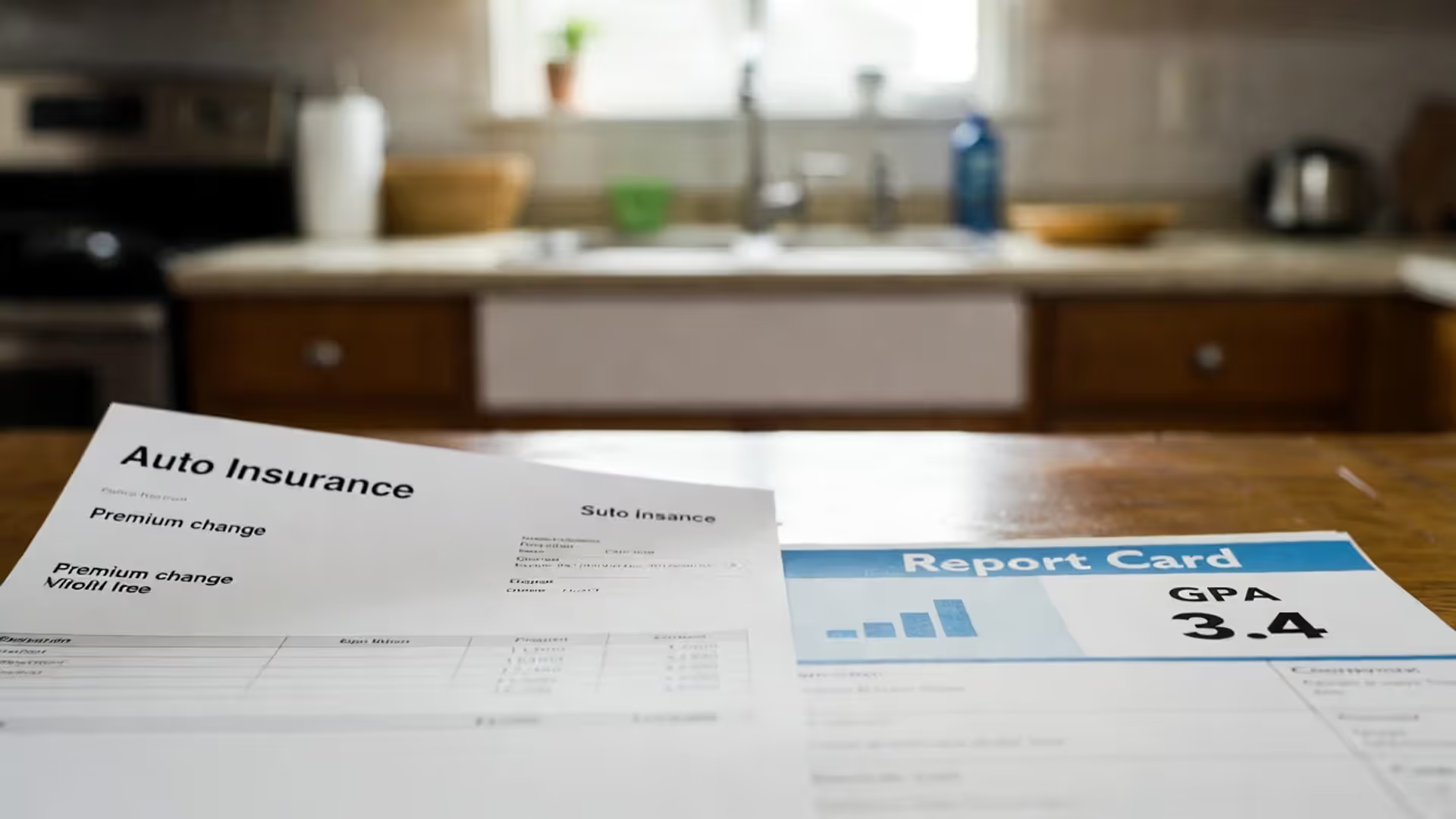
The right car can lower insurance costs for years.
How to Choose the Right Vehicle for Lower Insurance Costs

Content
Your next car purchase could save you hundreds—or cost you thousands—in insurance premiums over the life of your vehicle. Most shoppers focus on sticker price, fuel economy, and features, but the relationship between your vehicle and insurance costs deserves equal attention before you sign any paperwork.
Insurance companies analyze dozens of data points when calculating your premium, and many of them tie directly to the car sitting in your driveway. A sedan and an SUV with identical purchase prices can differ by $800 annually in insurance costs. Understanding these factors before you buy gives you negotiating power and long-term savings that compound year after year.
Why Your Vehicle Choice Directly Affects Insurance Premiums
Insurance carriers build their pricing models around one core principle: predicted cost of future claims. Every vehicle carries a unique risk profile based on real-world data from millions of policies and claims. When you request a quote, the insurer's algorithm immediately pulls historical information about your specific make, model, and year.
Three primary calculations drive this assessment. First, collision frequency—how often drivers of this vehicle file claims after accidents. A sports car driven aggressively will show higher collision rates than a family minivan. Second, injury severity—how badly occupants get hurt when crashes occur. Vehicles with poor structural integrity or missing safety features cost more to insure because injury claims run higher. Third, comprehensive losses—theft rates, vandalism frequency, weather damage, and animal strikes all factor into the equation.
The insurance company doesn't care about your personal driving record in isolation. They're betting on statistical patterns. If drivers of 2023 Dodge Chargers file 40% more claims than drivers of 2023 Honda Accords, every Charger owner pays more regardless of individual history. Your clean record helps, but it won't overcome the vehicle's inherent risk factors.
Vehicle value plays a role, but not the way most people assume. A $60,000 luxury sedan might cost less to insure than a $35,000 pickup truck if the sedan has advanced safety systems, low theft rates, and expensive repairs that discourage total-loss claims. Insurers also consider repair frequency for minor damage—vehicles with fragile bumpers or expensive sensors that need recalibration after fender-benders drive up costs through numerous small claims.
The Cheapest Vehicle Types to Insure and Why
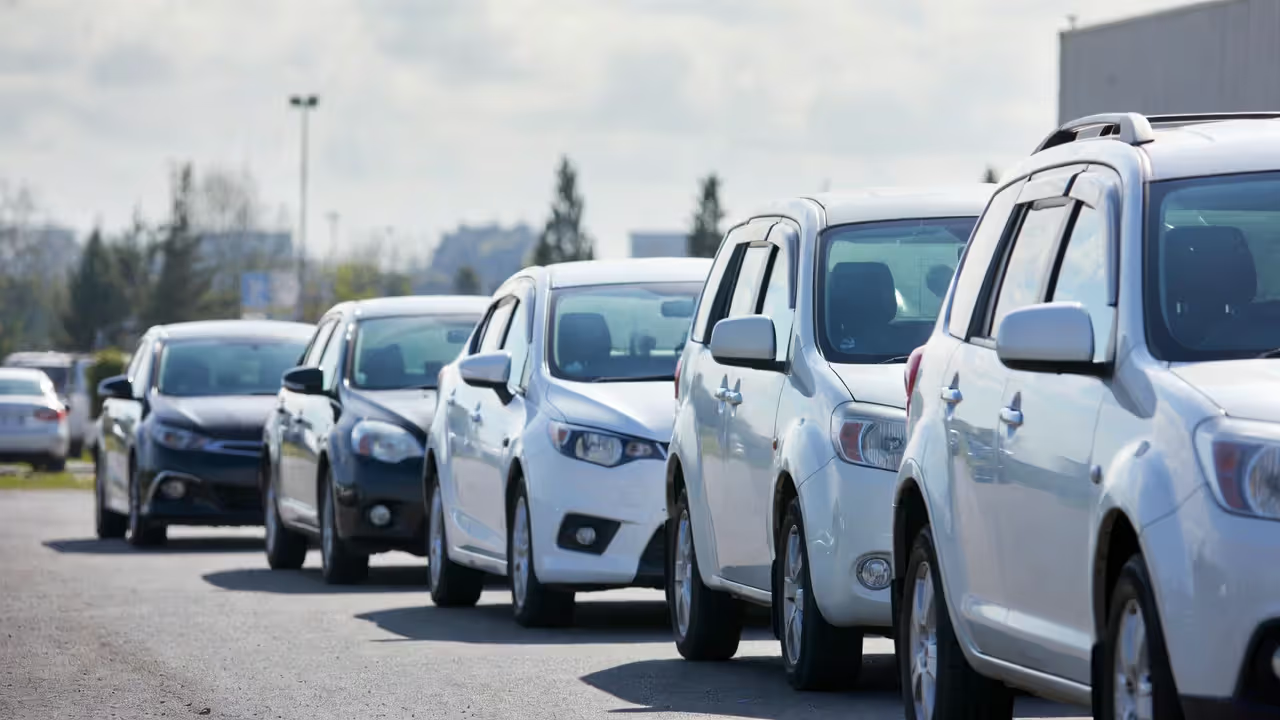
Insurance data consistently shows certain vehicle categories deliver lower premiums across most demographics and regions. The pattern isn't random—these vehicles share characteristics that reduce claim frequency and severity.
Author: Brandon Whitaker;
Source: trialstribulations.net
| Vehicle Category | Average Annual Premium | Example Models | Why It's Cheaper |
| Compact Sedan | $1,380 | Honda Civic, Toyota Corolla, Mazda3 | Low theft rates, affordable repairs, moderate performance, excellent crash protection |
| Midsize Sedan | $1,420 | Honda Accord, Toyota Camry, Subaru Legacy | Strong safety ratings, wide parts availability, family-oriented buyer profile |
| Compact SUV | $1,465 | Honda CR-V, Toyota RAV4, Mazda CX-5 | High safety scores, low theft appeal, practical design attracts cautious drivers |
| Minivan | $1,390 | Honda Odyssey, Toyota Sienna, Chrysler Pacifica | Lowest collision frequency, driven by family-focused owners, excellent crash protection |
| Midsize SUV (non-luxury) | $1,580 | Subaru Outback, Hyundai Santa Fe, Kia Sorento | Good safety features, moderate repair costs, less attractive to high-risk drivers |
These numbers represent national averages for a 40-year-old driver with clean record and standard coverage. Your actual costs will vary by location, age, and driving history, but the relative relationships between categories remain consistent.
The cheapest cars to insure share three traits: they appeal to statistically safer drivers, they protect occupants well during crashes, and they don't tempt thieves. A Honda Odyssey checks all three boxes. Sports cars, luxury vehicles, and large pickup trucks typically fail at least one criterion.
Small SUVs vs. Sedans: A Cost Comparison
The crossover boom has created an interesting insurance dynamic. Compact SUVs now rival sedans for affordability, sometimes undercutting them despite higher purchase prices. A 2024 Honda CR-V and 2024 Honda Accord carry nearly identical insurance premiums in most markets.
Small SUVs benefit from modern safety engineering. Their higher seating position improves visibility, reducing accident frequency. Reinforced passenger compartments and standard driver-assistance features—automatic emergency braking, lane-keeping assist, blind-spot monitoring—have dramatically improved their crash performance. Ten years ago, SUVs rolled over more frequently than cars. Today's models have electronic stability control and lower centers of gravity that have nearly eliminated this risk.
Sedans maintain a slight edge in markets where winter weather isn't a factor. In southern states, a Civic or Corolla often costs $50-$100 less annually than a CR-V or RAV4. In snow-prone regions, the SUV's all-wheel-drive capability and better bad-weather performance reverse this advantage because insurers see fewer weather-related claims.
One surprise: subcompact SUVs like the Mazda CX-30 or Hyundai Kona often cost more to insure than their compact siblings. The smaller vehicles attract younger buyers with less driving experience, skewing their claim statistics upward. If you're choosing between size classes, the compact category usually offers better insurance value.
Vehicles Insurance Companies Favor Most
Insurers won't publicly admit to "favorite" vehicles, but their premium structures reveal clear preferences. The models that consistently earn the lowest rates combine boring reliability with cutting-edge safety technology.
Subaru vehicles dominate low-cost insurance lists despite their all-wheel-drive systems, which typically increase premiums. The Outback, Forester, and Legacy benefit from Subaru's buyer demographic—educated, middle-aged drivers with low claim rates—and the brand's EyeSight driver-assistance suite, which comes standard on most trims. Insurance companies have documented measurable claim reductions in EyeSight-equipped vehicles.
Honda and Toyota sedans and crossovers remain insurance favorites for different reasons. Their legendary reliability means fewer mechanical-failure claims. Abundant parts availability keeps repair costs down. Conservative styling doesn't attract attention from thieves or aggressive drivers. A 2024 Camry or Accord represents the statistical sweet spot: safe enough to prevent injuries, common enough to repair cheaply, boring enough to attract responsible drivers.
Minivans occupy a special category. The Honda Odyssey and Toyota Sienna consistently rank among the absolute cheapest vehicles to insure across all segments. Parents driving kids to soccer practice simply don't generate many claims. These vehicles also excel in crash tests and lack the performance capability that enables dangerous driving.
How Safety Ratings Lower Your Insurance Bill
Two organizations—the Insurance Institute for Highway Safety (IIHS) and the National Highway Traffic Safety Administration (NHTSA)—test vehicles and publish ratings that directly influence insurance pricing. The safety ratings impact on premiums isn't subtle; it can swing your annual cost by 15-20% between similar vehicles.
IIHS conducts six crash tests: small overlap front (driver and passenger side), moderate overlap front, side impact, roof strength, and head restraints. They also evaluate headlight performance and front crash prevention systems. Vehicles earning "Top Safety Pick" or "Top Safety Pick+" designations receive measurable insurance discounts from most carriers. The organization specifically represents insurance company interests—they're funded by insurers and exist to reduce claim costs.
Author: Brandon Whitaker;
Source: trialstribulations.net
NHTSA uses a five-star rating system based on frontal crash, side crash, and rollover resistance tests. Their ratings appear on window stickers of new vehicles, making them more visible to shoppers. Most insurance companies incorporate both IIHS and NHTSA scores into their algorithms, but IIHS ratings carry more weight because their tests are more rigorous.
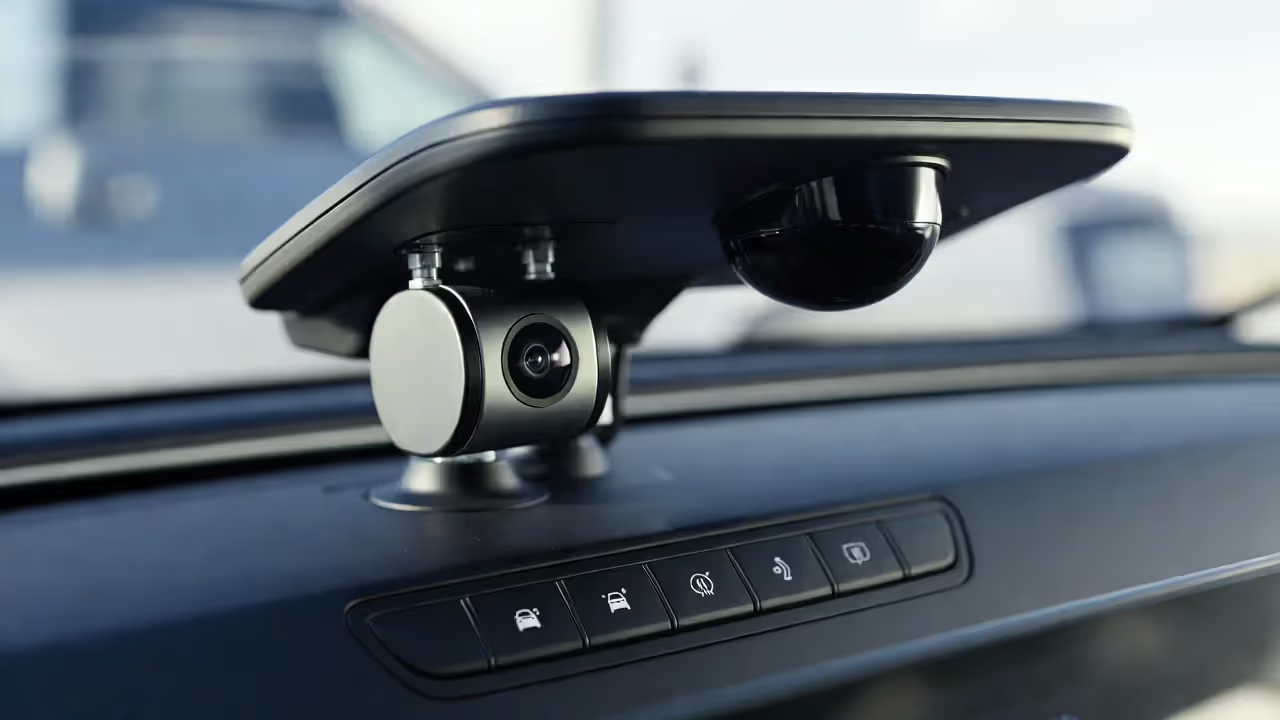
The real insurance savings come from specific safety technologies rather than overall scores. Automatic emergency braking (AEB) systems reduce rear-end collisions—the most common crash type—by up to 50% according to IIHS data. Lane departure warning and lane-keeping assist prevent run-off-road crashes. Blind-spot monitoring reduces lane-change accidents. Many insurers now offer explicit discounts for these features, typically 5-10% off collision coverage.
We've seen dramatic claim reductions in vehicles equipped with automatic emergency braking and adaptive cruise control. The data is so compelling that we're now pricing these features as aggressively as we price anti-lock brakes. A vehicle with a full suite of driver-assistance technology can earn the same premium as a comparable model from three years newer.
— Jennifer Rodriguez, Senior Vice President of Underwriting at a major national carrier
Forward collision warning alone doesn't help much—it's the automatic braking function that prevents crashes. Similarly, backup cameras are now legally required and don't earn discounts, but rear automatic braking systems do. When comparing vehicles, check for active intervention systems rather than passive warning systems.
One counterintuitive finding: vehicles with the absolute highest safety ratings sometimes cost more to insure than those with merely good ratings. Ultra-safe vehicles often carry expensive sensor arrays and calibration requirements. A minor 15-mph parking lot bump that causes $800 in damage to a standard bumper might require $2,500 in repairs on a vehicle with front radar, cameras, and sensors embedded in the fascia. Insurers factor these repair costs into premiums, sometimes offsetting the safety benefits.
Repair Costs: The Hidden Factor in Insurance Pricing
Most shoppers never consider repair costs until after an accident. Insurance companies think about nothing else. The repair cost factor influences premiums as much as safety ratings, yet it receives far less attention from buyers.
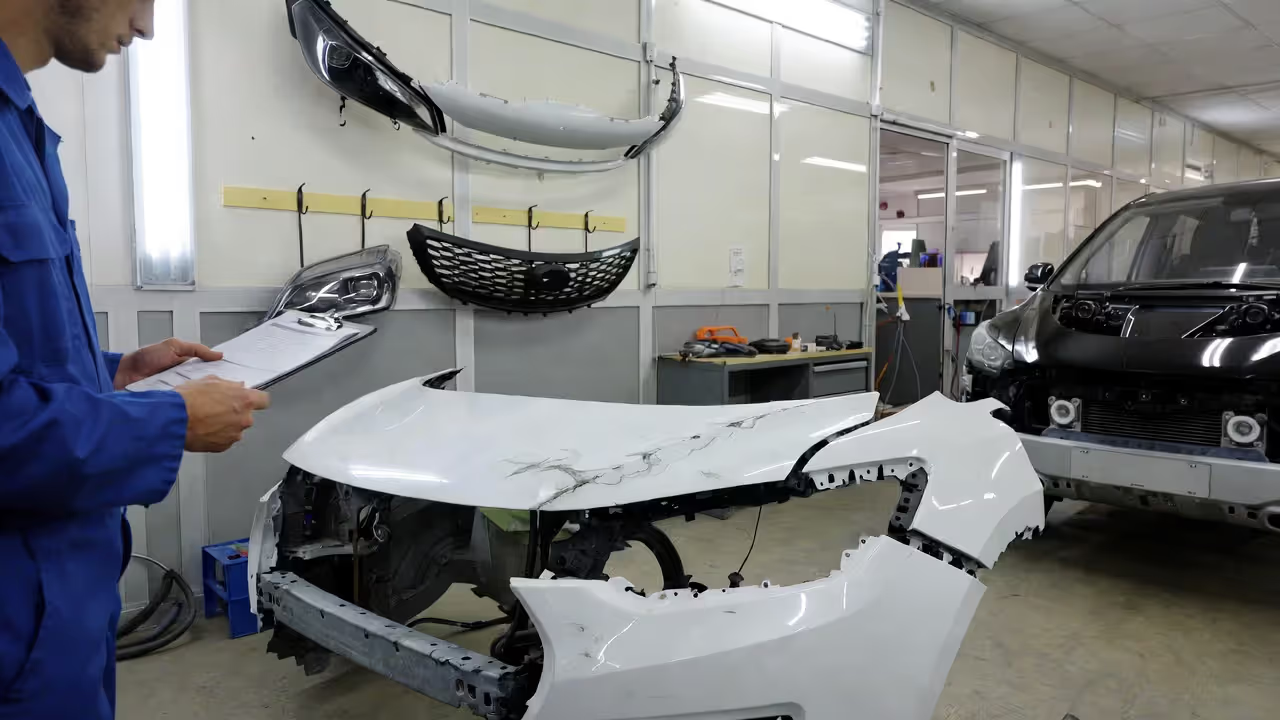
Parts availability drives repair costs more than initial vehicle price. A damaged Honda Accord fender costs $300 for the part and $400 for labor—$700 total. A comparable repair on a European luxury sedan might require a $900 part and $600 in labor because the complex body panels require more installation time. The luxury car's owner pays higher premiums every year to cover this difference, even if they never file a claim.
Aluminum body construction creates expensive repairs despite its safety and efficiency benefits. Ford's aluminum F-150 requires specialized repair facilities and training. A moderate collision that would cost $3,500 to fix on a steel-bodied truck might run $5,500 on the aluminum version. Insurance premiums reflect this reality. The same principle applies to Tesla vehicles—limited repair networks and proprietary parts drive up costs significantly.
Theft rates dramatically affect comprehensive coverage pricing. The most stolen vehicles in America aren't exotic supercars; they're practical trucks and SUVs with strong resale values and parts demand. Older Honda Accords and Civics (pre-2016 models without immobilizers) top theft lists because their parts fit many model years. Full-size pickup trucks—Ford F-Series, Chevrolet Silverado, RAM—get stolen for parts and export. If you're considering a vehicle that appears frequently on theft lists, expect comprehensive coverage to cost 25-40% more than average.
Manufacturers that use shared platforms and common parts across multiple models deliver repair savings. Toyota's TNGA platform underpins the Camry, RAV4, Highlander, and Sienna. Parts commonality means abundant availability and competitive pricing. Mazda's more unique engineering approach means less parts sharing and higher costs. Luxury brands with proprietary components—BMW, Mercedes-Benz, Audi—always cost more to repair than mainstream brands.
Modern driver-assistance systems add a hidden repair expense: calibration. After any collision repair or windshield replacement, forward-facing cameras and radar sensors require recalibration using specialized equipment. This adds $100-$300 to repair bills. Some vehicles require static calibration in a shop; others need dynamic calibration involving test drives with diagnostic equipment. Insurance companies track these costs by make and model, adjusting premiums accordingly.
Headlight technology illustrates how advanced features increase costs. Basic halogen headlights cost $150-$300 to replace. LED headlights run $500-$1,000. Adaptive LED systems with automatic high-beams and cornering lights can exceed $2,000 per side. A minor front-end collision that damages both headlights might total $4,000 in lights alone on a luxury vehicle. Even if you never file a claim, you're paying higher premiums to cover this risk.
Author: Brandon Whitaker;
Source: trialstribulations.net
Building a Low-Risk Vehicle Profile
The ideal insurance-friendly vehicle combines multiple favorable characteristics into a complete risk profile. No single factor determines your premium; insurers evaluate the total package.
Start with age and depreciation. New vehicles cost more to insure because they're worth more and require original equipment parts. But vehicles older than eight years sometimes see premium increases because safety technology lags behind current standards and structural integrity degrades. The sweet spot is typically 2-4 years old—enough depreciation to lower comprehensive and collision coverage costs, but new enough to have modern safety features.
Mileage matters less than most people think for insurance purposes. High-mileage vehicles don't automatically cost more to insure unless the mileage indicates heavy use that increases accident exposure. A 2021 vehicle with 60,000 highway miles driven by a traveling salesperson might cost less to insure than an identical 2021 with 20,000 urban miles driven in stop-and-go traffic.
Anti-theft features deliver measurable savings. Factory alarm systems, immobilizers, and GPS tracking reduce theft risk. Some insurers offer specific discounts for aftermarket systems like LoJack. Vehicles with push-button start and encrypted key fobs are harder to steal than older models with traditional keys. Parking location matters too—a garaged vehicle costs less to insure than one parked on the street, even if they're identical models.
Driver-assistance technology creates the biggest premium advantages. When comparing trim levels, upgrading to a package that includes adaptive cruise control, automatic emergency braking, lane-keeping assist, and blind-spot monitoring often pays for itself through insurance savings over 3-4 years. A $1,500 technology package that saves $300 annually on insurance breaks even after five years, then continues saving money for the life of the vehicle.
Engine choice affects premiums more than most buyers realize. The same model with different engines can carry different insurance costs. A four-cylinder Honda Accord costs less to insure than a V6 Accord. A turbocharged engine typically costs more than a naturally aspirated engine with similar power. The performance capability matters more than actual driver behavior—insurers price based on what the vehicle can do, not what you promise to do with it.
All-wheel drive presents a mixed picture. It improves safety in bad weather, potentially reducing accident frequency. But it also adds weight, complexity, and repair costs. In northern states with harsh winters, AWD vehicles often cost slightly less to insure. In southern states, they cost slightly more because the safety benefits don't materialize and the repair cost disadvantages remain.
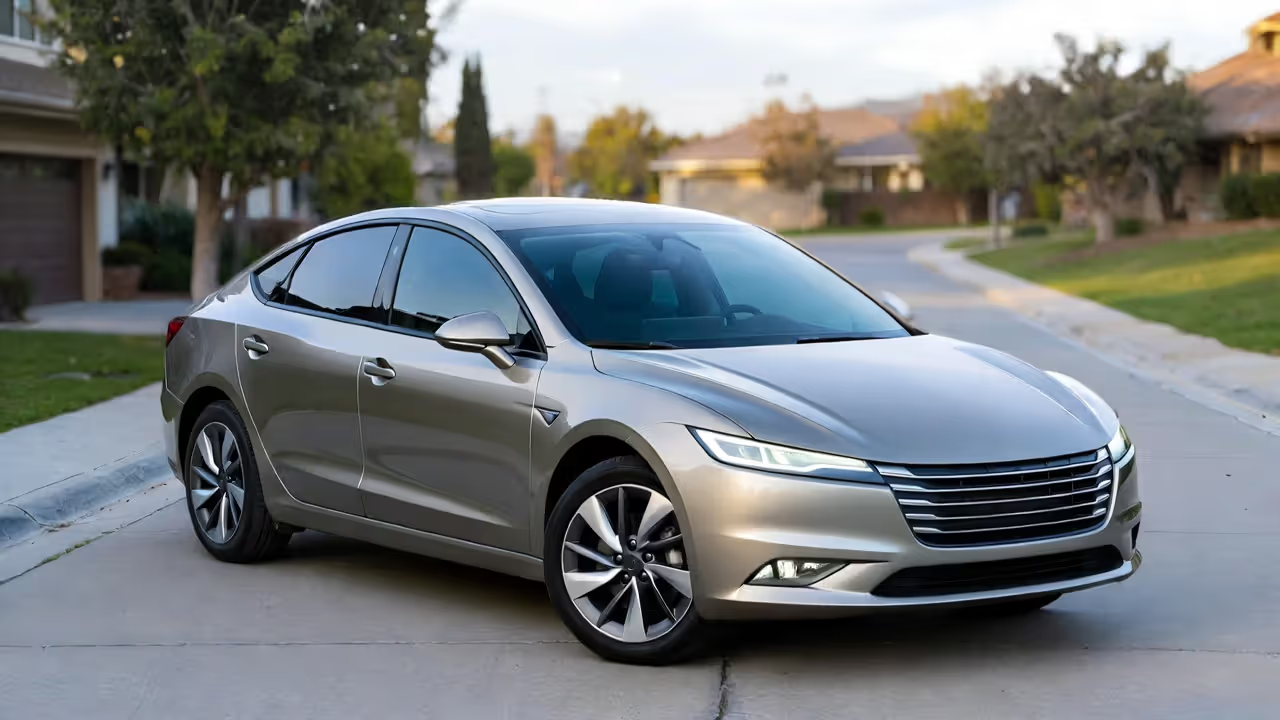
Avoid high-performance variants of mainstream vehicles. A standard Volkswagen Golf costs reasonable insurance premiums. A Golf R with 315 horsepower costs dramatically more despite sharing the same basic platform. Performance badges—SS, ST, R, Type R, SRT—signal higher risk to insurers. The premium increase often exceeds the performance upgrade's purchase price over the vehicle's ownership period.
Author: Brandon Whitaker;
Source: trialstribulations.net
Smart Strategies to Maximize Vehicle-Related Insurance Savings
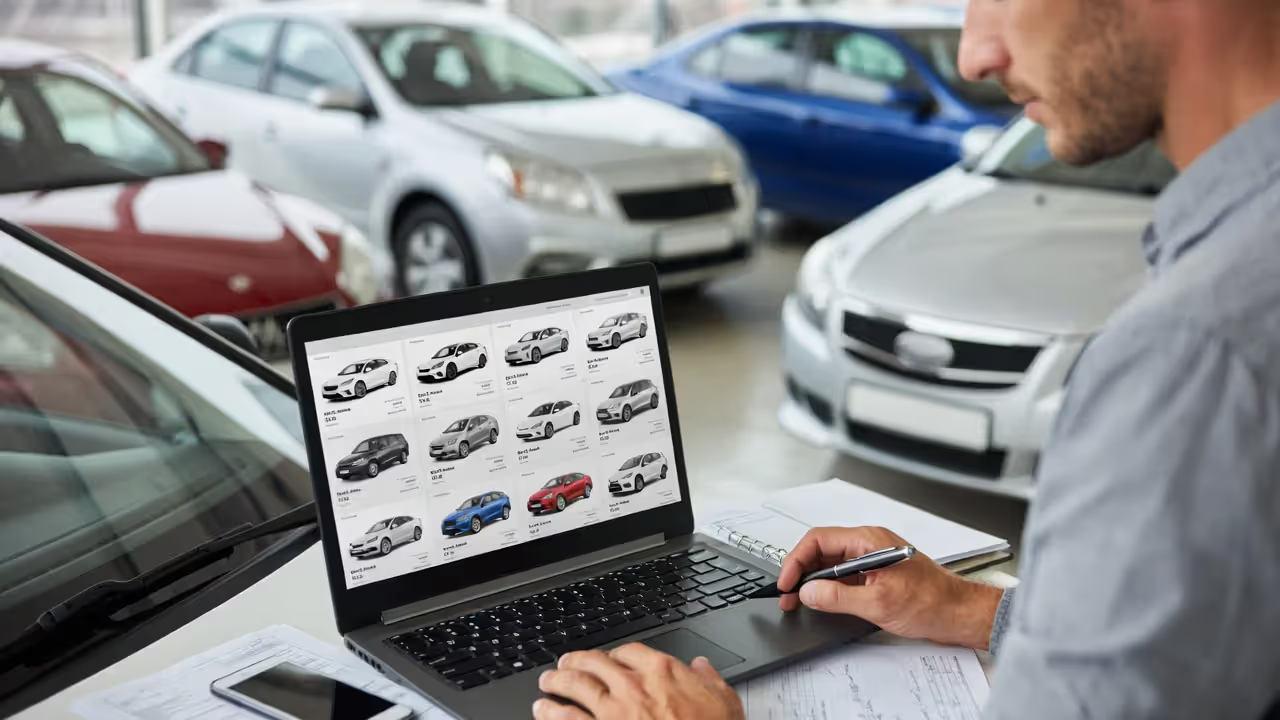
Timing your purchase strategically can unlock additional savings. Shop for insurance quotes before finalizing your vehicle purchase, not after. Get quotes on your top three choices. The differences might surprise you and influence your decision. A $2,000 purchase price difference between two vehicles might disappear if one costs $500 more annually to insure.
Many buyers make the mistake of falling in love with a specific vehicle, buying it, then discovering the insurance costs. By that point, you've lost negotiating power. Knowing the insurance costs upfront gives you leverage—you might negotiate harder on purchase price for the vehicle with higher insurance costs, or you might switch to the more affordable option.
Consider bundling opportunities as part of your vehicle decision. If you're choosing between similar vehicles and one is manufactured by a company that offers multi-policy discounts with your current insurer, that relationship might tip the scales. Some insurers offer better rates on domestic brands, others on imports. A quick conversation with your agent can reveal these preferences.
Trim level decisions significantly impact insurance costs. Base models with fewer features cost less to repair and insure. Luxury trims with leather, premium audio, sunroofs, and advanced lighting cost more. Sometimes the insurance difference between trim levels exceeds the monthly payment difference. A mid-level trim often provides the best balance—enough safety features to earn discounts without the expensive components that drive up repair costs.
Model year transitions create opportunities. When new model years arrive in fall, previous-year inventory gets discounted. A 2023 model purchased in late 2023 or early 2024 costs the same to insure as the 2024 version but might sell for $3,000-$5,000 less. Insurance companies don't care about model year as much as calendar year—a 2023 vehicle purchased in January 2024 is still considered new for insurance purposes.
Avoid modifications that increase premiums. Aftermarket wheels, suspension modifications, performance upgrades, and custom paint all raise insurance costs. Some insurers won't cover modified vehicles at all. If you're buying a pre-owned vehicle, check for modifications and factor in either removal costs or insurance premium increases.
Paint color doesn't affect insurance rates—this is a persistent myth. Insurers don't ask about color when calculating premiums. Red cars don't cost more than white cars. However, unusual custom colors can affect resale value and comprehensive coverage because repairs require more expensive paint matching.
Lease versus purchase decisions have insurance implications. Leased vehicles require higher coverage limits and lower deductibles, increasing premiums. If you're comparing lease payments between vehicles, factor in the insurance cost differences. A vehicle with $100 higher monthly lease payments might actually cost less overall if it saves $80 monthly on insurance.
Author: Brandon Whitaker;
Source: trialstribulations.net
Frequently Asked Questions About Vehicles and Insurance Costs
Making Your Vehicle Work for Your Budget
Your vehicle choice creates financial consequences that extend far beyond the purchase price and monthly payment. Insurance premiums represent a significant, ongoing expense that compounds over years of ownership. A vehicle that costs $800 more annually to insure than an alternative will cost you $4,000 over five years—enough to upgrade features, cover maintenance, or pad your emergency fund.
The cheapest cars to insure aren't necessarily boring or undesirable. Many practical, well-engineered vehicles deliver low insurance costs alongside reliability, safety, and reasonable ownership experiences. The key is understanding what insurers value—crash protection, affordable repairs, theft resistance, and driver demographics—then finding vehicles that excel in these areas while meeting your needs.
Before you visit dealerships or browse online listings, spend time researching insurance costs. Get quotes on multiple vehicles. Understand the trade-offs between purchase price and ongoing insurance expenses. Sometimes paying slightly more upfront for a vehicle with better safety ratings and lower repair costs saves money over time. Other times, choosing a less powerful trim level or a different model entirely makes the most financial sense.
The right vehicle for insurance savings balances your practical needs with statistical realities. You can't control how other drivers behave or what claims history your chosen vehicle carries. But you can make informed decisions that work with insurance pricing realities rather than against them. Your wallet will thank you every time that premium bill arrives.