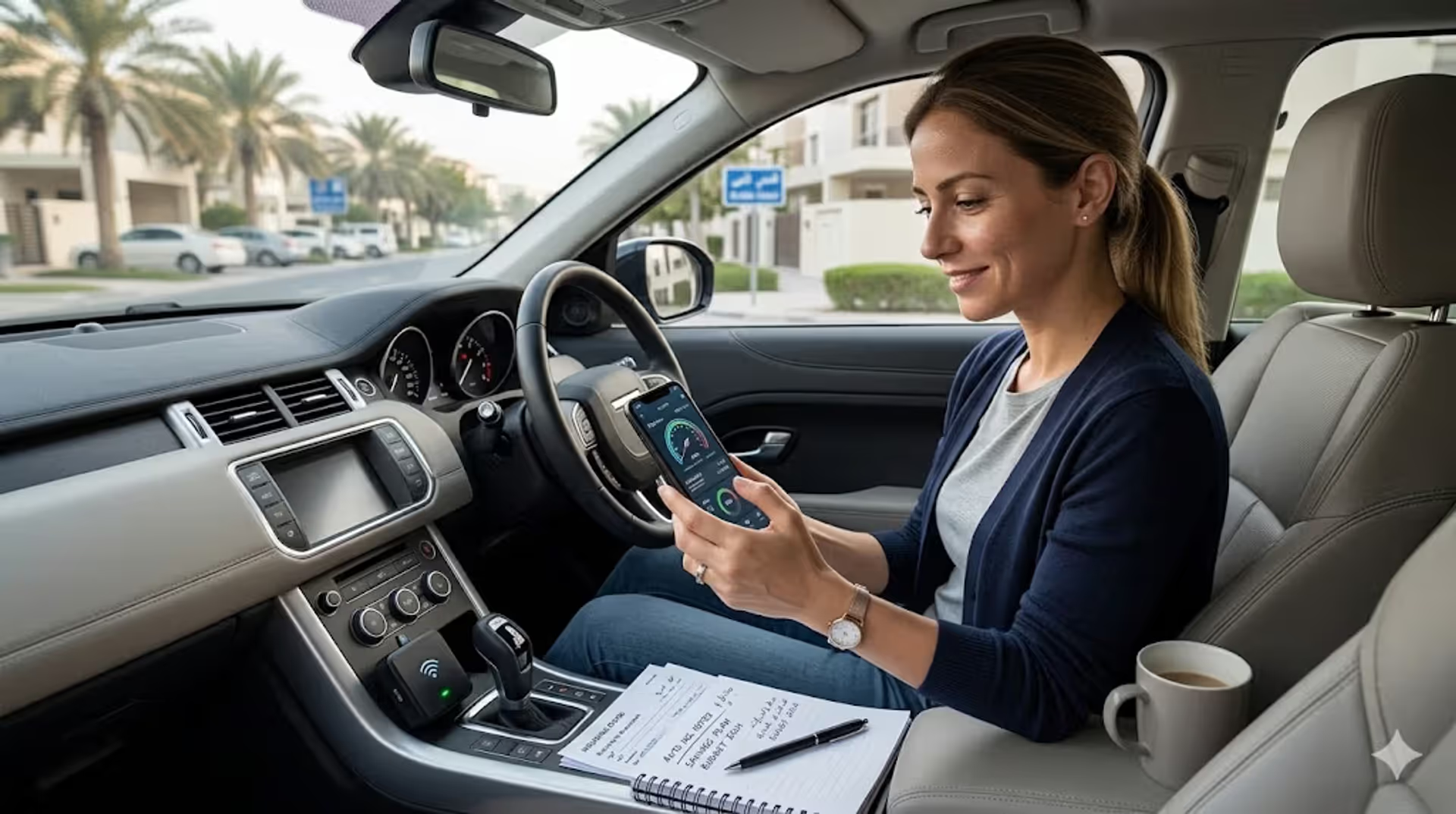
Safe driving data can turn into real insurance savings.
How Telematics Quote Discounts Lower Your Auto Insurance Costs

Content
Want to cut your car insurance bill by sharing your driving habits with your insurer? Telematics programs—those smartphone apps and plug-in gadgets that monitor how you drive—can slash premiums by a third or more if you brake smoothly, avoid midnight trips, and keep your phone in your pocket.
Here's how it works in practice. You download your insurer's app or plug a small device into your car's diagnostic port (that's the OBD-II port mechanics use). Then you drive normally for about three months while the system records everything: how hard you brake at stop signs, whether you floor it leaving traffic lights, how many miles you cover each week, and what time your car leaves the driveway. After that evaluation window closes, your insurer recalculates your premium based on actual behavior rather than just your age and zip code.
Right off the bat, many companies hand you a 5% to 10% discount simply for saying yes to monitoring—before you've driven a single tracked mile. Drive well during the evaluation period and you'll stack additional savings on top of that initial cut. A 45-year-old paying $1,400 annually could drop to $980 with a 30% telematics discount—$420 back in their pocket each year.
What separates someone who saves $400 from someone who saves $80? Knowing exactly what triggers score penalties, understanding how each carrier's program differs, and recognizing the enrollment restrictions that might disqualify you. The sections ahead explain precisely how insurers score your trips, which programs deliver the fattest discounts, and which everyday habits quietly drain your savings.
What Insurance Companies Track Through Telematics Programs
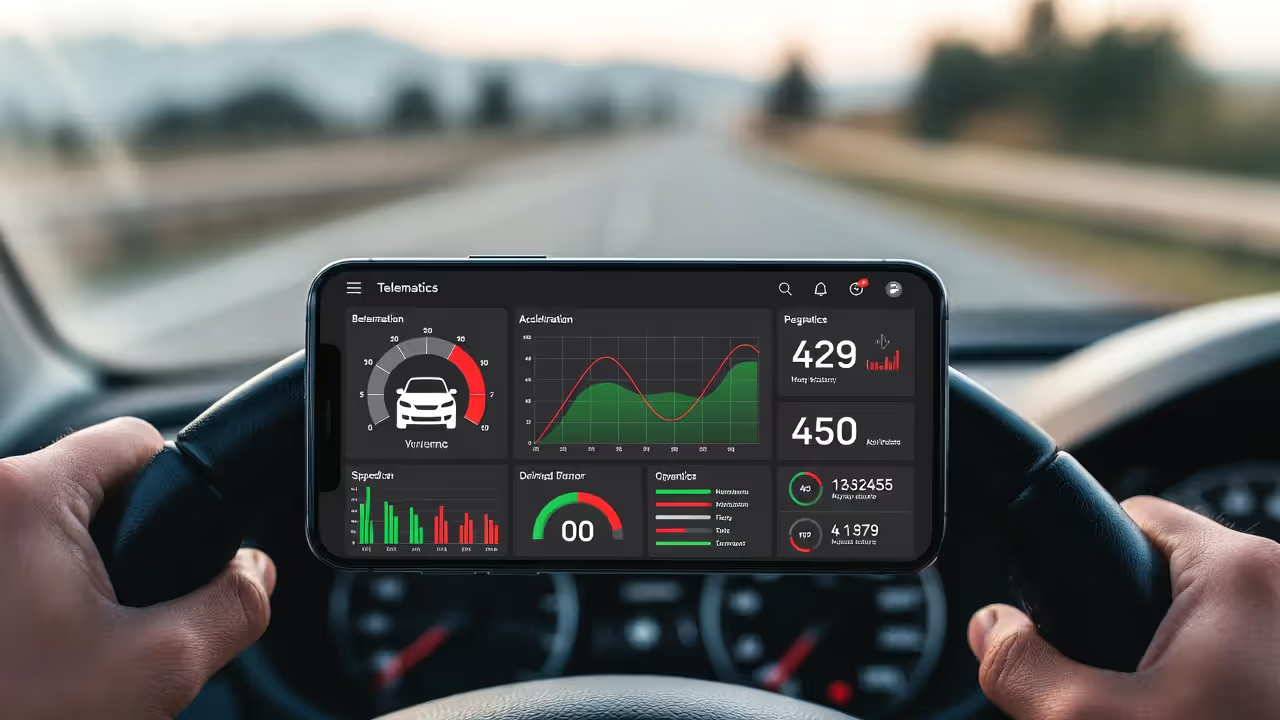
All telematics systems monitor a handful of core behaviors, but each insurer weights these factors differently when calculating your final score. Hard stops—slamming the brakes hard enough to make your coffee spill—rank as the most universally penalized action because actuarial data links frequent hard braking to higher accident rates. If your car decelerates faster than 7 miles per hour in a single second, that event gets logged and counted against you.
Quick acceleration from a standstill matters less than sudden speed bursts mid-trip. Insurers care more about you punching the gas to squeeze into a closing gap than they do about spirited launches from red lights. Tight cornering that triggers lateral G-forces, driving faster than posted speed limits, and total miles covered each month all flow into your risk calculation. The annual 5,000-mile driver gets better scores than someone covering 20,000 miles because more time on the road equals more exposure to potential accidents.
When you drive matters nearly as much as how you drive. Trips starting between 11 p.m. and 5 a.m. raise red flags across almost every program because statistics show elevated crash rates during those hours—drunk drivers on the road, reduced visibility, driver fatigue. Rush-hour highway driving costs you points with some insurers but not others. Phone interaction while the vehicle is moving—detected through screen taps, app switching, and motion sensors—has become a major scoring factor as distracted driving data has improved.
Author: Calvin Prescott;
Source: trialstribulations.net
Data Points That Affect Your Premium
Five specific measurements drive your discount up or down more than anything else:
Hard braking frequency: Triggering more than one harsh stop per 100 miles starts eroding your score quickly. Sure, you'll occasionally need to brake hard when someone cuts you off or a deer jumps out. Insurers get that. But patterns matter—chronic hard braking suggests you follow too closely or don't scan far enough ahead.
Acceleration patterns: Smooth, gradual speed increases earn top marks. Sudden throttle inputs while already in motion—like flooring it to pass someone or racing to make a yellow light—hurt your score more than aggressive starts from complete stops. The difference comes down to risk: mid-block acceleration often indicates risky lane changes or intersection gambling.
Mileage totals: Lower numbers generally help your score, though the relationship isn't straightforward. Dropping from 15,000 to 12,000 annual miles might barely register, while cutting from 25,000 to 15,000 miles delivers noticeable savings. You hit diminishing returns once you're already below average.
High-risk hours: Each trip beginning between 11 p.m. and 5 a.m. dings your score, with weekend late-night drives sometimes weighted even more heavily. One weekly 11:30 p.m. airport pickup won't wreck your discount, but regular 2 a.m. drives absolutely will.
Phone use while moving: Any screen interaction logged while your vehicle travels down the road—texting, navigation adjustments, music app changes—can trigger penalties ranging from small score reductions to complete discount elimination. Some programs are ruthless about this.
Privacy Protections and Data Usage Limits
No federal law forces insurers to handle telematics data any particular way, so state insurance regulators make the rules—and those rules vary wildly. Most carriers promise they won't use your driving data to underwrite policies for other family members or automatically deny claims, but data showing you were driving 90 in a 55 zone when you crashed will definitely influence how they settle your claim and determine fault.
Your insurer typically hangs onto driving data for your policy term plus several years for internal analysis. You can request deletion after leaving the program, though they'll probably keep anonymized versions forever for actuarial modeling. GPS tracking capabilities differ dramatically by program. Some record your exact route for every trip, others only capture starting and ending locations, and a few skip GPS completely by relying solely on your phone's accelerometer to detect hard stops and quick starts. Check your specific program's privacy policy—insurers must disclose what they collect and who they might share it with.
Average Savings: What Drivers Actually Save With Monitoring Discounts
Marketing materials love to tout maximum possible discounts of 30% or 40%, but actual results for most participants land somewhere between 15% and 20%. Why the gap? Because earning a perfect score across every monitored category is nearly impossible for drivers with typical work schedules and family obligations. You might nail smooth braking but lose points for above-average mileage or unavoidable late-night trips to pick up teenagers from events.

Author: Calvin Prescott;
Source: trialstribulations.net
The comparison below shows how major insurers structure their programs according to public filings and industry analysis:
| Insurer Name | Sign-Up Discount | Top Possible Savings | Typical Results | How Long They Watch |
| Progressive Snapshot | None | 30% | 12-16% | 6 months initially |
| State Farm Drive Safe & Save | None | 30% | 15-20% | One rating cycle |
| Allstate Drivewise | 10% upfront | 25% total | 15-18% | 6 months initially |
| Geico DriveEasy | 10% upfront | 25% total | 10-15% | Continuous |
| Liberty Mutual RightTrack | 5% upfront | 30% total | 13-17% | 90 days |
| Nationwide SmartRide | 10% upfront | 40% total | 20-25% | 6 months only |
Nationwide's SmartRide stands out for average results because it functions as a one-time evaluation—finish your six-month monitoring window, lock in your discount, then uninstall the device and keep your savings. Progressive Snapshot and State Farm Drive Safe & Save keep watching your driving throughout your entire policy period, recalculating rates at each renewal based on your recent months of performance. That ongoing scrutiny cuts both ways: improve your habits and watch your discount grow, but slip into riskier patterns and your savings shrink at the next renewal.
Immediate sign-up bonuses make programs like Allstate Drivewise and Geico DriveEasy attractive even if your performance-based savings end up modest. Drivers with short commutes, flexible schedules that dodge rush-hour congestion, and naturally smooth driving styles routinely hit 20% to 25% combined savings. Those stuck with long highway commutes, late-shift work schedules, or urban stop-and-go traffic should expect more realistic results in the 10% to 15% range.
Enrollment Requirements and Eligibility Rules by Carrier
Not every policyholder can join a telematics program, and restrictions vary significantly across companies. Some welcome all licensed drivers regardless of age or history, while others impose limitations designed to exclude higher-risk participants whose poor performance might generate bad press if their rates climb.
Age and License Restrictions
Major insurers generally let any licensed driver on your policy participate, but a handful impose minimum age cutoffs. Drivers under 21 sometimes face restrictions with certain programs—not because of technical problems but because of regulatory sensitivity around rate increases for young drivers who score poorly. Teen drivers actually benefit enormously from telematics when they demonstrate safe habits, potentially saving families several hundred dollars each year on notoriously expensive youth policies.
Brand-new drivers—those with permits or licenses issued within the last six months—may need to wait before some programs will accept them. This waiting period gives the insurer time to establish baseline risk using conventional factors before adding usage-based pricing on top. Drivers with recent major violations like DUI or reckless driving charges, or those with recent at-fault accidents, might be locked out of enrollment for one to three years depending on severity.
Vehicle Compatibility and Device Options
Plug-in telematics devices need an OBD-II diagnostic port, which has been mandatory in all U.S. vehicles since the 1996 model year. Older vehicles have to use smartphone-app programs that depend on phone sensors instead of vehicle data. App-based monitoring has gotten dramatically better at accuracy but still sometimes struggles to tell driver from passenger, occasionally generating false flags for phone use when you're actually riding shotgun.
Certain luxury and electric vehicles encrypt or restrict OBD-II data access, making plug-in devices worthless. Tesla owners, for instance, usually must rely on app-based tracking. Vehicles with aftermarket performance modifications might produce unusual data patterns that confuse scoring algorithms—lowered suspension could trigger false hard-braking flags on perfectly normal stops, while performance chips might make acceleration patterns look more aggressive than they feel.
Commercial vehicles, rental cars, and anything used for ride-sharing are universally banned from personal auto telematics programs. If you occasionally drive for Uber or deliver food part-time, disclose this to your insurer—most will disqualify you from telematics but won't cancel your underlying policy. Trying to hide commercial use while enrolled in monitoring could give them grounds to deny claims later.
How Insurers Calculate Risk and Adjust Your Rate
Behind the simple "drive safely, pay less" message sits complex risk evaluation machinery. Insurers don't just tally up hard stops and hand out discounts based on totals. Instead they run proprietary algorithms that weight various factors differently, compare your results against peer groups, and make adjustments for circumstances outside your control.
Scoring typically starts by establishing baseline expected risk from traditional underwriting factors—your age, where you live, what you drive, which coverage limits you selected, and your claims track record. Telematics data then pushes this baseline figure up or down. A 45-year-old suburban driver might start with a baseline risk index of 100, and excellent telematics results could drop that to 75, triggering a 25% premium cut. Poor performance might push the index to 110, but most programs cap rate increases at zero—you won't pay more than you would without monitoring, though you'll forfeit any sign-up bonus you initially received.
Behavioral triggers that significantly move your score include:
Consistency beats perfection. A driver with steady, moderate results across all categories usually scores higher than someone with perfect braking but sky-high mileage or frequent late-night trips. Insurers recognize that zero hard stops over six months might actually indicate someone who drives so timidly they become a hazard to surrounding traffic.
Context adjustments are minimal. Algorithms can't tell the difference between hard braking to avoid hitting a kid who ran into the street versus hard braking because you were tailgating. A few carriers manually review unusual trip patterns if you contest your score, but most depend entirely on automated scoring. The system assumes truly unavoidable emergency stops are rare enough that they won't materially drag down your overall average.
Review periods are strategically chosen. Carriers using continuous monitoring typically calculate scores from rolling 90-day or six-month windows. That means a rough month gradually ages out of your score instead of haunting you for a full policy year. Programs with one-time evaluation periods lock in your discount for the entire term but may let you re-enroll at renewal if you want to try improving your savings.
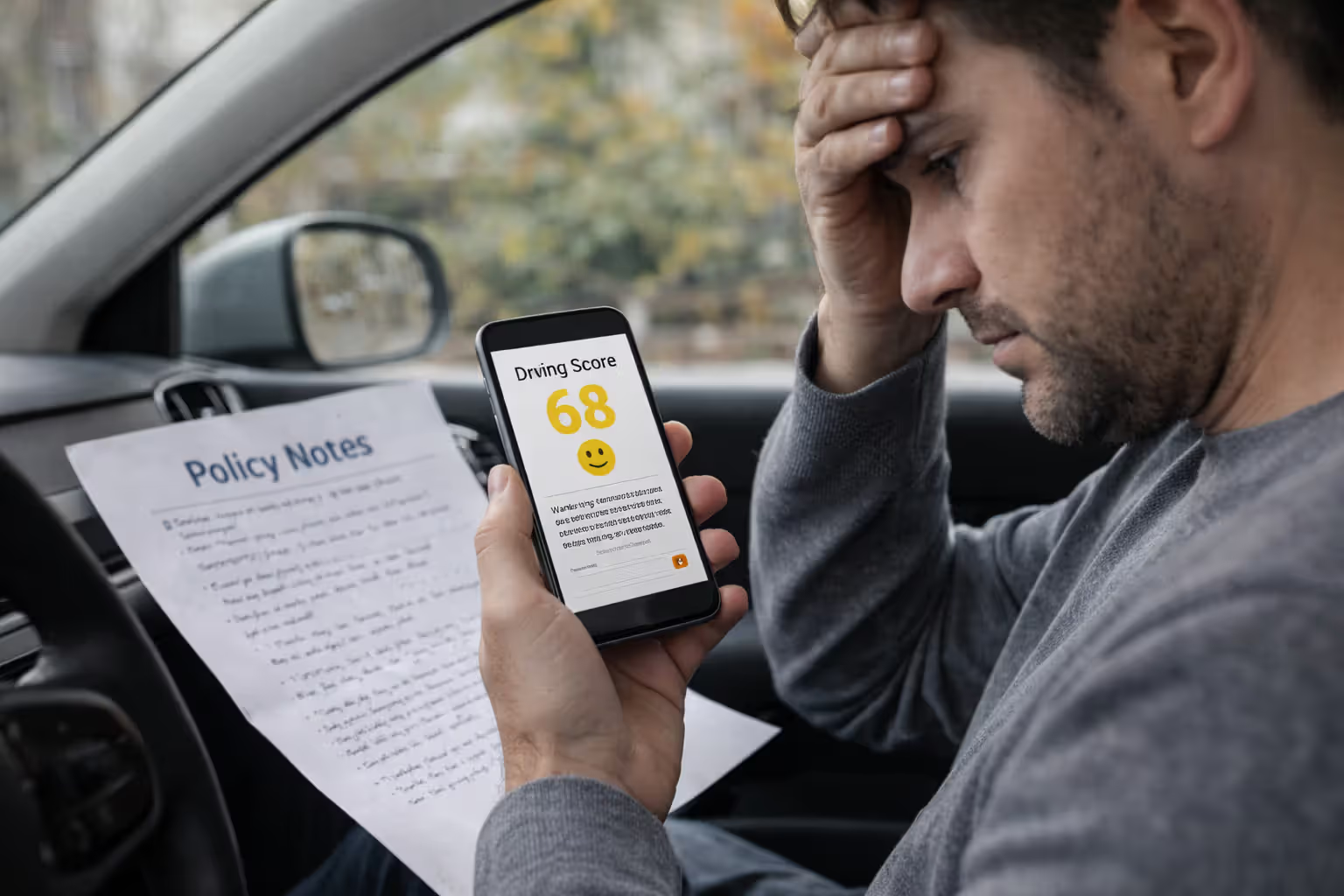
Telematics programs can deliver real savings for careful drivers, but consumers should understand that the algorithms are black boxes. You're trusting the insurer's data collection accuracy and scoring fairness without independent verification. Read the fine print about whether poor performance can increase your rate, and confirm you can opt out if the program isn't working in your favor.
— Robert Hunter, Director of Insurance at the Consumer Federation of America
The most sophisticated insurers now deploy machine learning models trained on millions of actual trips to spot patterns human analysts would never catch. These models might discover that drivers who brake smoothly but constantly switch lanes score similarly to drivers with occasional hard stops but stable lane discipline. As these algorithms evolve, the definition of "safe driving" becomes increasingly sophisticated and sometimes disconnected from what traditional driver's ed classes taught you.
Author: Calvin Prescott;
Source: trialstribulations.net
Comparing Top Telematics Programs: Features and Limitations
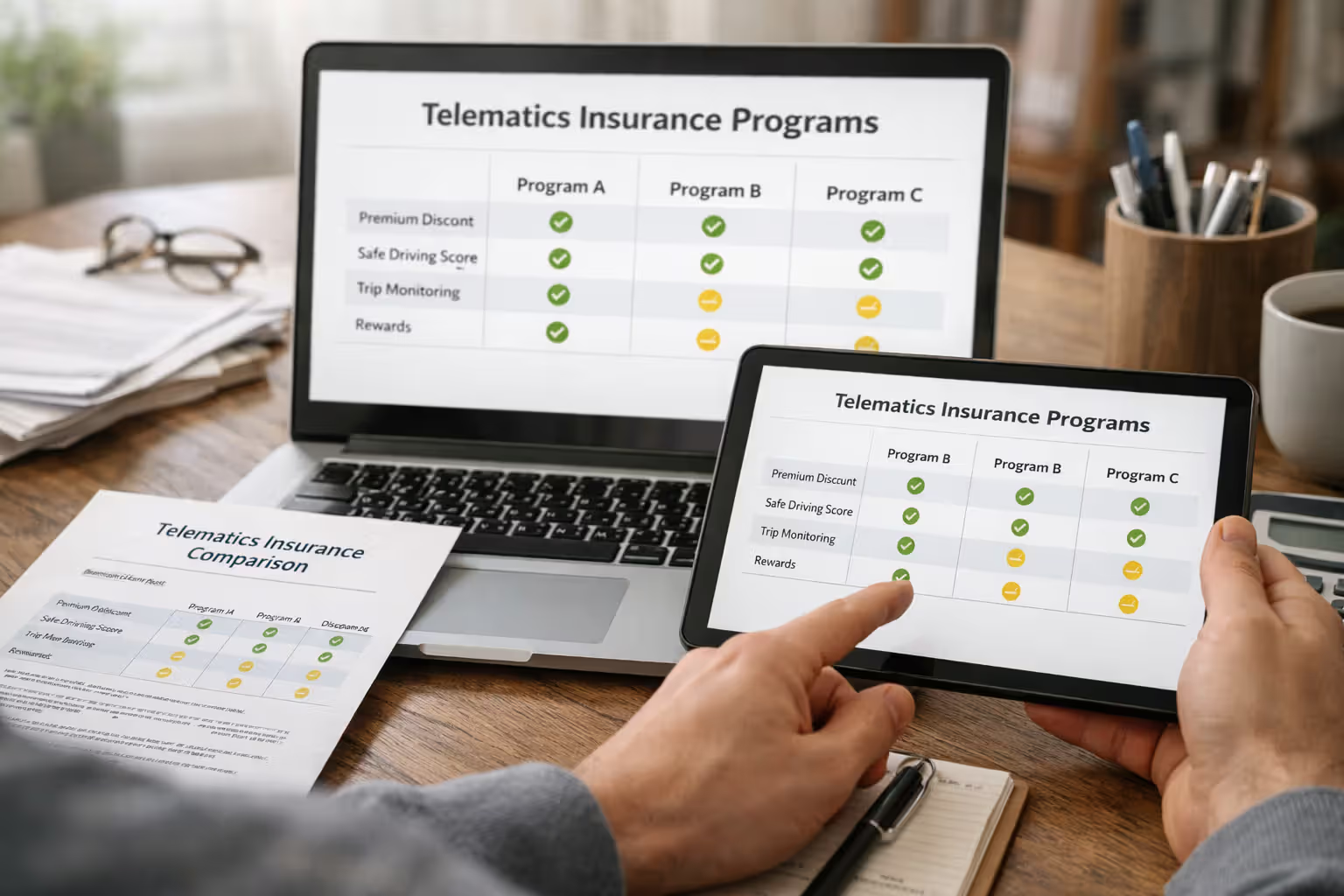
Examining programs side by side reveals major differences in tracking methods, penalty structures, and exit flexibility. Picking the wrong program for your specific driving patterns can leave money on the table or, worse, stick you with a smaller discount than a competitor would have provided.
| Program Name | Tracking Method | Monitors Braking | Tracks Mileage | Penalizes Night Driving | Poor Performance Penalty |
| Progressive Snapshot | App or plug-in | Yes | Yes | Yes (midnight-4am) | No rate hike, but lose sign-up bonus |
| State Farm Drive Safe & Save | App only | Yes | Yes | No | No penalty, just smaller savings |
| Allstate Drivewise | App only | Yes | Yes | No | No rate hike, keep sign-up bonus |
| Geico DriveEasy | App only | Yes | Yes | No | Rate can increase up to 10% in some states |
| Liberty Mutual RightTrack | Plug-in only | Yes | Yes | Yes (11pm-5am) | No rate hike possible |
| Nationwide SmartRide | Plug-in only | Yes | Yes | Yes (midnight-4am) | No penalty, one-time scoring |
Geico's DriveEasy program stands alone as one of the few that might actually raise your premium based on bad driving performance, though this varies by state law. Most states where Geico offers DriveEasy cap increases at 5% to 10%, and the company emphasizes that rate hikes happen rarely. Still, drivers with unavoidably risky schedules—night shift workers, high-mileage commuters—should think carefully before enrolling.
State Farm's Drive Safe & Save drops time-of-day penalties completely, which makes it perfect for drivers whose work schedules demand late-night or very early morning commutes. The trade-off? Mileage carries extra weight in their scoring formula, so high-mileage drivers might see smaller discounts despite excellent braking and acceleration marks.
App-based programs deliver convenience—no hardware to install, no hassle transferring devices between vehicles—but they introduce phone-use complications. If you regularly ride as a passenger and use your phone during those trips, app-based tracking might wrongly flag you for distracted driving. Most apps include a passenger mode you can activate manually, but forgetting to toggle it even once can hurt your score. Device-based programs sidestep this issue entirely since they monitor vehicle behavior independent of phone activity.
Exit flexibility matters when your circumstances shift. All major programs let you quit monitoring, but the financial consequences differ dramatically. With Allstate Drivewise, you keep your sign-up bonus even after stopping monitoring, though you'll lose performance-based savings at your next renewal. Progressive Snapshot demands continuous tracking to preserve your discount—opt out and you return to your original premium. Nationwide SmartRide locks in your discount once the evaluation period ends, so you can yank out the device and keep your savings indefinitely as long as you stay with the company.
Common Mistakes That Reduce Your Telematics Discount
Author: Calvin Prescott;
Source: trialstribulations.net
Even cautious drivers sabotage their savings through habits they don't realize the system punishes. Understanding these traps helps you maximize savings without fundamentally changing how you drive.
Forgetting the app is always watching: You drive carefully during your weekday commute but then lend your car to your college-age nephew for a weekend road trip. His aggressive highway merging and 2 a.m. driving destroy your monthly score. Most programs let you mark trips as "different driver" within 24 to 48 hours, but participants often never discover this feature or remember it too late.
Aggressive parking lot maneuvers: Low-speed hard braking—jamming the brakes at 10 mph to avoid a runaway shopping cart—counts exactly the same as highway emergency stops in most scoring systems. The algorithm can't distinguish parking lot navigation from road driving, so those jerky movements while hunting for a spot accumulate against your total.
Ignoring the calibration window: Several programs don't begin actual scoring immediately after enrollment. You might get a two-week calibration period while the system learns your car's characteristics and you get comfortable with the app interface. Drivers who miss this detail may drive carelessly at first, assuming they're not being monitored yet, only to discover later those trips counted fully.
Cold-brake hard stops: Your first stop after starting the car often feels grabbier than subsequent stops because brake components haven't warmed to operating temperature yet. If your daily routine involves numerous short trips with just one or two stops each, you might rack up hard-braking penalties despite smooth technique. Anticipating stops even earlier than usual during that first mile helps compensate for cold brake response.
Inconsistent phone discipline: Using your phone at a red light seems harmless—the car isn't moving—but most apps can't separate stopped-in-traffic phone use from actually-driving phone use. They detect screen activity and vehicle motion during the same trip and flag it as distracted driving. Either commit to zero phone touches from ignition-on to ignition-off, or accept that occasional use will cost points.
Misjudging high-risk hours: You assume risky hours mean 1 a.m. to 3 a.m., but your insurer's algorithm penalizes trips starting anytime between 11 p.m. and 5 a.m. Those 11:30 p.m. grocery runs or 5:30 a.m. gym sessions accumulate more penalty weight than you expect. Check your specific program's definition of high-risk windows and adjust your schedule where possible.
Letting the app version get stale: Outdated app versions sometimes have bugs that misclassify trips or fail to sync data properly, leaving you with an incomplete view of your score. Enable automatic updates or manually check monthly to confirm you're running the current release.
FAQ: Telematics Insurance Discounts
Making Telematics Work for Your Budget
Telematics quote discounts represent one of very few opportunities to directly control insurance costs through behavior rather than hoping for favorable rate adjustments at renewal. Drivers who understand what insurers measure, how scoring algorithms function, and which programs align with their actual circumstances can lock in savings that compound year after year.
Success depends on matching program features to your real driving patterns rather than optimistic ones. Night shift workers shouldn't touch programs that heavily penalize late-night trips. High-mileage commuters need programs that prioritize smooth driving technique over total miles covered. Families with multiple drivers should favor programs with robust trip designation features to prevent one person's aggressive driving from tanking everyone's discount.
Start by requesting quotes both with and without telematics from multiple insurers. The carrier offering your best traditional rate might not provide your best telematics discount, and the reverse holds true too. Factor in sign-up bonuses when comparing—a 10% immediate discount from Allstate could outweigh Progressive's potentially larger performance discount if you're uncertain about scoring well. Read program terms carefully to understand whether poor performance can raise your rate and whether you can exit without financial penalty.
Watch your score actively during the evaluation period instead of waiting until it concludes. Most apps provide weekly or monthly feedback showing which behaviors help or hurt your discount. Use this information to adjust habits costing you money—if late-night trips drag down your score, rescheduling even two or three outings monthly can meaningfully boost your results.
Telematics programs won't suit every driver, but for the majority who maintain reasonable driving habits, they offer a straightforward path to lower premiums backed by objective data rather than demographic stereotypes.