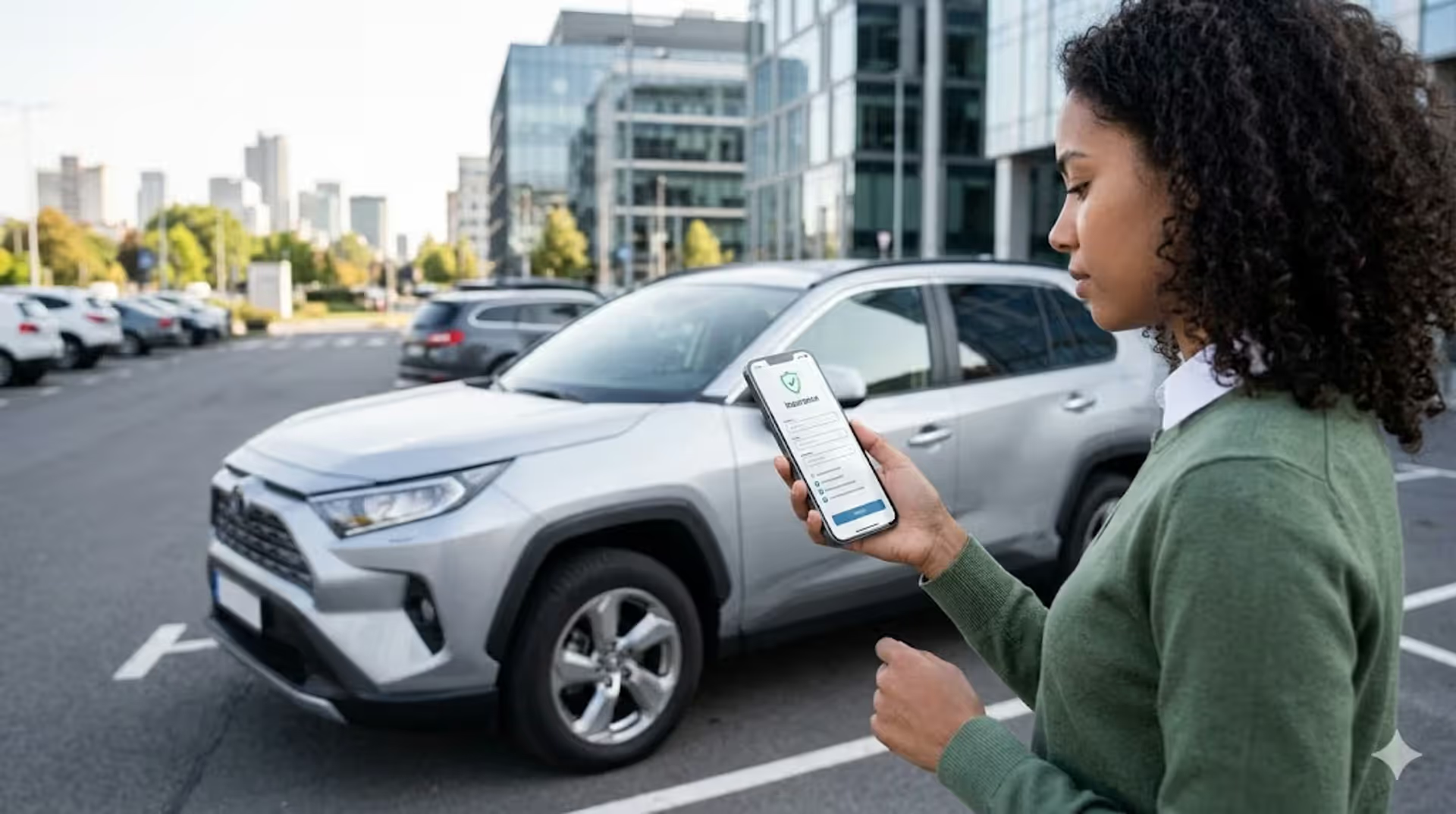
person using smartphone app to manage car insurance
Lemonade Car Insurance Review for Drivers Considering a Switch

Content
In 2021, Lemonade jumped into auto insurance after disrupting the renters and homeowners markets. They're selling a specific vision: quote in seconds, file claims through your phone, let artificial intelligence handle the paperwork instead of calling adjusters who put you on hold.
Sounds great on paper. But here's what actually happens when you buy a policy, file a claim, and deal with their system day-to-day.
We'll cover the real costs, how fast claims actually get paid, what happens when the AI can't help you, and whether switching from your current insurer makes sense.
What Makes Lemonade Different from Traditional Auto Insurers
Most insurers profit when they collect more in premiums than they pay in claims. Keep the difference, pay shareholders, repeat. Lemonade structured their business differently—they take a flat 25% administrative fee upfront, then use remaining premium dollars for claims. Whatever's left over? Goes to charities you pick when signing up. They call this the "Giveback."
Started in 2015 selling renters insurance. Added homeowners coverage in 2016, pet insurance in 2020, life insurance in 2020, then finally car insurance in 2021. The progression makes sense—they tested their AI-driven model on simpler products before tackling auto insurance's complexity.
Their ideal customer: someone under 40 who handles everything via smartphone, trusts apps more than insurance agents, and wants to know their premium isn't just padding some executive's bonus.

Author: Tara Livingston;
Source: trialstribulations.net
Right now you can buy Lemonade car insurance in about 20 states. That number keeps growing, but if you're in Montana, Wyoming, Alaska, or most of the Southeast, you're currently stuck with traditional options. Worth checking their site quarterly if you're interested but not yet eligible.
The AI handling isn't just clever branding. Maya (their chatbot) generates binding quotes in 90 seconds or less. Jim (another bot) approves straightforward claims without human review. But don't picture robots running everything—licensed adjusters still handle complicated situations where judgment matters more than algorithms.
Who wins with Lemonade's setup? People who'd rather tap buttons than schedule agent meetings. Drivers who want plain-English policies without decoding insurance jargon. Anyone who's felt ripped off by traditional carriers and wants transparency about where money flows.
How Lemonade's AI Claims Process Actually Works
Their claims process is where Lemonade either impresses you or leaves you frustrated, depending on what you're claiming.
Filing a Claim Through the App
Launch the app. Tap "File a Claim." Jim starts asking questions—what happened, when, where, who's involved. You'll type responses, upload damage photos, attach police reports or repair estimates depending on the situation.
Clear-cut claims get handled fast. Windshield crack from a rock? Tree branch crushed your hood during a storm? Someone stole your catalogs? If documentation supports your story and liability's obvious, Jim can approve payment in minutes. Lemonade loves advertising their three-second claim approvals, though that's rare. Most approvals take hours or a day.
What counts as "clear-cut"? Single-car accidents without injuries. Weather damage with photos showing cause and effect. Theft with a police report. Basically situations where facts aren't disputed and fault's obvious.
Multi-car accidents? Injury claims? Conflicting liability accounts? Expect human review, which means waiting like you would anywhere else.
Average Claim Settlement Times
Lemonade doesn't publish comprehensive data breaking down settlement times by claim type, making objective assessment tricky. They spotlight instant approvals while glossing over longer cases.
Glass claims and minor comprehensive incidents often wrap up same-day or within 48 hours. A customer reported submitting windshield photos at 9 AM, getting approval by noon, and having the check by 2 PM.
Collision claims involving another vehicle typically take one to three weeks. One driver got rear-ended, had a police report saying the other guy was at fault, and still waited 22 days while Lemonade "investigated." Another waited five weeks for a parking lot incident because the other driver disputed who backed into whom.
Here's the disconnect: you start with instant AI responses that feel magical, then suddenly you're in limbo waiting for an adjuster with zero timeline. That whiplash from "instant" to "we'll get back to you" frustrates people.
Documentation quality matters exponentially more with Lemonade than traditional insurers. The AI needs clear evidence—vague photos or missing reports trigger human review, which kills the speed advantage. Take photos from multiple angles immediately. Get police reports for anything beyond scratches. The better your evidence, the faster Jim can process everything.

Author: Tara Livingston;
Source: trialstribulations.net
Breaking Down Lemonade's Car Insurance Pricing
Lemonade markets itself as affordable, especially for younger drivers who typically get hammered on premiums. Reality's more nuanced.
Factors That Affect Your Quote
They use the same rating factors everyone else does: age, accidents, tickets, credit score (where legal), ZIP code, car make/model, coverage limits, and yearly mileage. The flat-fee structure means they're not inflating premiums to boost profits, but they still charge based on statistical risk.
Drivers under 30 often score competitive quotes. A 24-year-old with a clean record in Columbus, Ohio might see $165 monthly for full coverage through Lemonade versus $240 from Allstate. But a 50-year-old with two decades of accident-free driving? Frequently pays less at State Farm or USAA, which reward long histories and loyalty.
Your ZIP code creates massive swings. Urban areas with high theft and accident rates cost more than suburbs. A driver in downtown Chicago might pay double what someone in Naperville pays for identical coverage.
Vehicle choice matters predictably. Insuring a 2022 Mazda3 runs cheaper than a 2022 Tesla Model 3 because repairs cost less and thieves target it less. Lemonade's quotes reflect these realities—they're not magically discounting luxury cars.
No usage-based programs exist where they monitor your actual driving to lower rates. Progressive's Snapshot, State Farm's Drive Safe & Save, or Root's built-in telematics offer potentially bigger discounts if you drive safely. Lemonade doesn't compete here.
Available Discounts and Savings Options
Expect fewer discounts than traditional carriers offer, which matches Lemonade's simplified philosophy but costs you if you'd qualify for stacked discounts elsewhere.
You'll find: multi-policy bundling (10-15% off when combining with renters/homeowners), pay-in-full discount (prepaying your six-month premium saves a few percent), and good driver discount (clean record for three years). That's essentially it.
Missing discounts: defensive driving course completion, vehicle safety tech (automatic braking, lane departure warning), professional memberships, military service, good student, homeownership, and more. Traditional insurers pile on discounts—you might stack five or six simultaneously. Lemonade doesn't play that game.
The bundling discount offers the biggest savings opportunity. Already have Lemonade renters or homeowners insurance? Adding auto makes sense. Shopping from scratch? Compare bundled prices across multiple companies, not just Lemonade.
One interesting feature: total pricing transparency. The app shows exactly how your premium divides—percentage toward claims, their 25% fee, taxes, other costs. State Farm and Geico don't show this breakdown. Some customers appreciate seeing behind the curtain even if it doesn't directly save money.

Author: Tara Livingston;
Source: trialstribulations.net
Coverage Options and Policy Limitations
Lemonade sells standard coverage types: liability (bodily injury plus property damage), collision protection, comprehensive protection, uninsured/underinsured motorist coverage, medical payments, and personal injury protection where state law requires it.
Liability limits start at state minimums and go up to options like 250/500/100 (dollars in thousands: per person injury, per accident injury, property damage). Choosing minimum limits cuts premium costs but leaves you exposed if you cause a serious accident. Financial planners typically suggest 100/300/100 at minimum for reasonable protection.
Collision and comprehensive require choosing deductibles, usually between $250 and $2,000. Pick $2,000 and your premium drops significantly. But you'll pay that full $2,000 out-of-pocket before insurance kicks in. Common mistake: saving $200 yearly with a high deductible, then not having $2,000 available when your car needs repairs.
Add-ons include rental car reimbursement, roadside assistance (towing, flat tire help, lockout service), and gap insurance for financed vehicles worth less than you owe. These extras are straightforward—no confusing endorsements or complicated options.
Important limitations: rideshare coverage remains unavailable in most states, meaning Uber and Lyft drivers can't rely on Lemonade alone. Classic car coverage doesn't exist—vehicles over 25 years old need specialty insurers. Custom equipment protection (expensive stereos, body modifications) is extremely limited.
State-specific rules create variation. Michigan offers multiple PIP options following their recent reform. California policies follow that state's unique regulatory requirements. Don't assume what's available in Texas matches what you'll find in New York.
| Coverage Type | Lemonade Offers | State Farm Offers | Geico Offers | Progressive Offers | Root Offers |
| Liability Protection | ✓ Standard limits | ✓ Up to 500/500/500 | ✓ Up to 500/500/500 | ✓ Up to 500/500/500 | ✓ Standard limits |
| Collision Protection | ✓ | ✓ | ✓ | ✓ | ✓ |
| Comprehensive Protection | ✓ | ✓ | ✓ | ✓ | ✓ |
| Uninsured Driver Protection | ✓ | ✓ | ✓ | ✓ | ✓ |
| Rideshare Driver Coverage | Only few states | ✓ | ✓ | ✓ | ✗ |
| Accident Forgiveness Program | ✗ | ✓ | ✓ | ✓ | ✗ |
| Driving-Based Discounts | ✗ | ✓ Drive Safe & Save | ✓ DriveEasy program | ✓ Snapshot device | ✓ Built-in tracking |
| Classic/Antique Vehicle | ✗ | ✓ | Some situations | Some situations | ✗ |
| New Vehicle Replacement | ✗ | ✓ | ✓ | ✓ | ✗ |
| Shrinking Deductible | ✗ | ✓ | ✗ | ✓ | ✗ |
| In-Person Agent | ✗ | ✓ | Some locations | Some locations | ✗ |
The Digital Experience: App Features and Customer Service
You'll handle absolutely everything through Lemonade's app or website. No offices to visit. No agent relationship. No traditional phone support during shopping.
This digital-only model either feels liberating or isolating depending on your comfort with technology.
The app design is clean and straightforward. Getting a quote takes maybe five minutes: punch in your details, answer questions about your vehicle and driving history, see your price immediately. Buying the policy requires a few more screens plus payment info. Start to finish, you can go from curious to covered in ten minutes from your couch.
Managing your policy happens entirely in-app. Adding a vehicle? Changing your address? Adjusting coverage amounts? Everything's available through your phone without paperwork or phone calls. Your insurance ID card lives digitally, pulling up instantly when cops ask for proof of insurance.
What about help when the app can't solve your problem? Lemonade offers customer service through in-app chat and email. Response speed varies—basic questions get answered within hours, complicated issues might take a day. Phone support exists for claims and emergencies, but there's no general hotline for casual questions.
This works beautifully for tech-savvy people who prefer self-service and written communication. Hate talking on phones? Love solving things yourself? You'll be happy. Want to discuss options with someone who knows your situation? Prefer building a relationship with your agent? Lemonade's approach will feel cold and impersonal.
Older adults uncomfortable with smartphones would genuinely struggle here. The platform assumes you're comfortable with apps, photo uploads, and digital troubleshooting without guidance.
One underrated benefit: policy changes happen immediately. Adjust your coverage at 3 PM Tuesday, and it's active at 3:01 PM Tuesday. Traditional insurers often need 24-48 hours for changes to process, creating coverage gaps.

Author: Tara Livingston;
Source: trialstribulations.net
Lemonade's Financial Strength and Customer Satisfaction Ratings
Your insurer needs to stay solvent when you file claims. Lemonade's ratings reflect their status as a newer company still building financial reserves and proving themselves.
AM Best, the insurance industry's primary rating agency, gives Lemonade a "B" rating—categorized as "Good." Respectable but not exceptional. State Farm and Geico carry "A+" ratings labeled "Superior," reflecting decades of financial stability and massive reserves.
Context matters: B ratings aren't red flags for newer companies. It indicates Lemonade can meet obligations but has less financial cushion than century-old industry giants. You're taking slightly more risk than with top-rated insurers, though state guarantee funds protect policyholders if companies fail.
Customer satisfaction data shows mixed results. Lemonade doesn't appear in J.D. Power's annual auto insurance satisfaction rankings yet—they lack sufficient market share and claim volume for inclusion. Third-party review platforms show polarized reactions: customers either praise the simplicity and speed or criticize the absence of human support when problems arise.
The Better Business Bureau gives Lemonade an "A+" organizational rating, but customer reviews average around 1.5 stars based on filed complaints. Common gripes: claim denials without clear explanation, difficulty reaching humans for complex issues, sudden policy cancellations. Remember though—BBB reviews skew negative across industries because unhappy customers file complaints while satisfied ones rarely leave positive feedback.
Official complaint ratios (complaints divided by premium volume) aren't widely available yet for Lemonade's auto insurance since they entered the market recently. State insurance departments track these metrics, but meaningful comparison needs several years of data.
Lemonade represents an interesting experiment in insurance technology and business models. Their AI-driven approach can deliver remarkable speed for straightforward claims, but the real test comes with complex situations requiring judgment and negotiation. Early data suggests they're learning and adapting, but consumers should understand they're choosing a company still proving itself rather than an established carrier with decades of claims-handling experience.
— Amy Bach
Who Should (and Shouldn't) Choose Lemonade for Car Insurance
Lemonade works great for certain drivers and poorly for others. Figuring out which group you're in helps determine if they make sense.
Drivers who benefit from choosing Lemonade:
Younger drivers—especially those under 35—often face absurdly high premiums at traditional carriers. Lemonade frequently offers competitive pricing for this group. Tech-comfortable people who handle banking, shopping, and communication through phones won't find Lemonade's digital approach limiting.
Straightforward coverage needs work best here. Need liability, collision, comprehensive without specialized add-ons? You'll get adequate protection without paying for features you won't use.
Already have renters or homeowners insurance through Lemonade? Definitely get an auto quote. The bundling discount makes switching worthwhile, plus managing everything in one app simplifies life.
People bothered by traditional insurance opacity appreciate Lemonade's transparency. If you've felt manipulated by carriers who seem designed to maximize profits while minimizing payouts, Lemonade's flat-fee structure and Giveback program provide peace of mind.
Drivers who should avoid Lemonade:
Want a personal relationship with your insurance agent? That doesn't exist here. If you value talking through coverage decisions with someone who knows your name and situation, traditional insurers with local agents serve you better.
Need specialized coverage—rideshare driving, classic cars, extensive vehicle modifications—look elsewhere. Lemonade's simplified approach means limited options for unique situations.
Complex insurance histories create problems. Multiple accidents, DUI convictions, or coverage gaps often require human underwriting and individual evaluation. Lemonade's automated system handles these poorly. You might get rejected outright or receive quotes higher than traditional insurers willing to evaluate your full circumstances.
Obviously, if Lemonade isn't available in your state yet, the decision's made for you. Check back periodically as they expand.
Older drivers with extensive claims-free histories often find better pricing elsewhere. A 55-year-old with 30 years of perfect driving frequently pays less at State Farm, Nationwide, or USAA (if military-eligible) than Lemonade offers.
The choice ultimately involves trade-offs. Lemonade delivers simplicity, speed, and transparency. Traditional insurers provide more coverage options, human support, and decades of financial stability. Neither universally beats the other—it depends on your specific priorities and circumstances.
Frequently Asked Questions About Lemonade Car Insurance
Lemonade brings legitimate innovation to car insurance through artificial intelligence and transparent business practices. Their digital approach delivers genuine speed and simplicity that traditional companies can't match. For specific customers—young, tech-comfortable, with straightforward needs—they represent a compelling alternative to century-old carriers.
But innovation doesn't automatically mean better for everyone. Lack of human support frustrates customers dealing with complicated claims. Limited coverage options and state availability restrict who benefits from their platform. Financial ratings remain adequate but don't match industry leaders with decades of proven stability.
Get quotes from multiple insurers before switching to Lemonade, including traditional carriers. Compare not just price but also coverage breadth, customer service philosophy, and financial strength. Read policy documents carefully regardless of which company you choose—understanding what's actually covered versus excluded matters infinitely more than marketing claims or brand recognition.
Lemonade works best as one option in your shopping process, not an automatic choice. Their unique approach deserves serious consideration, but so do your specific requirements, preferences, and circumstances. The right car insurance isn't about newest technology or cleverest marketing—it's about reliable coverage at fair pricing from a company that will pay legitimate claims when you desperately need them.